


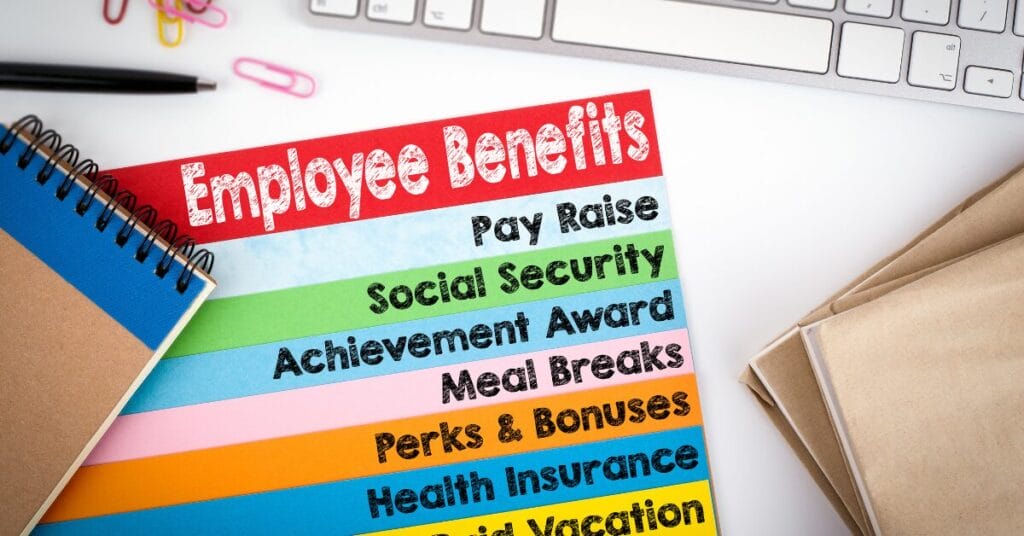
For many UK and European founders, the early stage of US expansion feels manageable.
You register the US entity. You hire your first two or three people in New York, Austin, or Boston. You take more sales calls in American time zones. On paper, it still feels like the company you already run.
Then you sit down to write your first proper US job offer. You reach the benefits section, and the ground shifts.
That moment catches a lot of founders off guard. The salary number is easy. The rest of the package is not.
In my work leading Employer of Record services at Foothold America, I see this pattern often. Founders assume the benefits approach that works at home will carry across the Atlantic. It rarely does.
Your home benefits playbook does not travel
In the UK, a good deal of the package is decided for you. Automatic pension enrolment, statutory holiday, and the NHS in the background all set a baseline.
Across Europe the specifics differ, but the principle holds. Employment law and social systems define much of what an employee receives.
The US works the other way around. There is very little statutory floor. Almost everything in the package is a choice the employer makes.
That freedom sounds appealing at first. In practice, it means you carry more responsibility for design, cost, and how the offer lands with candidates.
Health insurance is the part founders underestimate most
In most of Europe, healthcare sits outside the employment relationship. In the US, it sits right inside it.
For American employees, the health plan is often the first thing they check. It shapes how they judge the whole offer.
It is also expensive. In 2025, the average annual premium for employer family health coverage reached $26,993, with employers covering roughly $20,143 of that.
That is a real line in your budget, not a rounding error. Even a small senior team can add tens of thousands of dollars a year in premiums alone.
Founders who model US salaries but forget the benefits load tend to get a surprise at their first serious headcount review.
American candidates read the whole package, not just the salary
This is the cultural gap that surprises founders most.
Strong US candidates tend to weigh an offer in full. They look at the health plan, the retirement match, paid time off, and the rest, then set it against the base pay.
The data supports this. In a 2025 Indeed survey, 49% of employedUS job seekers named better benefits as a reason for looking for a new role, second only to higher pay.
That was the joint highest share among the eight countries surveyed, level with Canada. Benefits are not a pleasant extra in the US market. They are part of how people decide where to work.
Employers feel the same pull. In SHRM’s 2025 survey, 88% of employers rated health benefits as very or extremely important to their workforce.
Paid time off follows a different logic
Here is a fact that unsettles a lot of European founders. US federal law does not require employers to offer any paid vacation at all.
The Department of Labor is clear that paid time off is a matter of agreement between employer and employee, not a legal right.
Compare that with the UK, where full-time workers are entitled to 28 days of paid holiday. The contrast is stark.
This does not mean US employees expect no time off. Most employers offer it to stay competitive. But you set the policy, and you set it against the local market rather than a statutory minimum.
Where founders should slow down and think
Most problems come from moving too fast and assuming the US can bolt straight onto the existing company.
Two things in particular deserve care.
First, the rules change by state. Paid sick leave, final pay, and pay-out of unused holiday all vary across the country. A policy that works in Texas may not satisfy the rules in California or New York.
Second, employment itself is structured differently. Most US employment is at-will, which changes how contracts, notice, and termination work compared with the UK or EU.
None of this is a reason to slow your expansion. It is a reason to design the employment side deliberately, before the first senior offer goes out.
The most common mistake
The most common mistake is the simplest one. Treating the US benefits package as a translation of the home one.
That single assumption tends to create the rest of the problems. Founders budget for salaries but not the full benefits load. They underestimate how much US candidates weigh benefits. They copy a home holiday policy without checking the local market. They miss state-level rules until those rules cause a compliance issue.
On their own, none of these is fatal. Together, they create friction at exactly the point when you want hiring to feel easy.
It helps to remember the scale of the cost. In the US, benefits make up roughly 30% of total compensation for private-sector workers, so the package is a large share of what you actually spend on each hire.
The bottom line
UK and European founders often expect the hard part of US hiring to be legal or administrative.
In practice, the harder part is mindset. The home model gives you certainty inside fixed rules. The US model gives you flexibility, and hands you the responsibility that comes with it.
The companies that handle this well accept something early. Their US team will not look exactly like the one they built at home.
That is not a problem. It is usually a sign the business is becoming truly international.
Thinking about your first US hires?
If you are a UK or European founder planning to build a team in the US, the benefits package is one of the first places the two systems part ways.
At Foothold America, we help European businesses employ people across the US through our Employer of Record and PEO+ cross-border services. Real people handle the detail, in every state you hire in.
If you would like to talk it through,get in touch with me.
Laurie Spicer is Director of US Expansion at Foothold America. She works with UK and European businesses as they build teams and set up operations in the US, from first hires through to full market entry.
Frequently Asked Questions: Rethinking US Employee Benefits
Get answers to all your questions and take the first step towards a US business expansion.
Do we have to provide health insurance to US employees?
It depends on your size. The Affordable Care Act requires employers with 50 or more full-time equivalent staff to offer coverage. Smaller employers are not required to, but most offer a plan to stay competitive for talent.
How much should we budget for benefits on top of salary?
A useful rule of thumb is that benefits add a meaningful share on top of base pay. Across US private industry, benefits make up around 30% of total compensation, so a benefits load of roughly a quarter to a third of salary is a sensible starting point for planning. Model it role by role.
How much paid time off should we offer in the US?
There is no legal minimum, so the answer is set by your market. Many US employers offer somewhere around two to three weeks of paid vacation to start, plus separate sick leave in states that require it. The right figure depends on the role, the sector, and where the employee is based.
Can an Employer of Record handle US benefits for us?
Yes. An Employer of Record can put your US staff on compliant health, retirement, and leave plans without you setting up your own benefits infrastructure. That is often the fastest way for a European company to make competitive offers from day one. Once you have your own US entity, a PEO+ arrangement gives you the same access to group plans.
GET IN TOUCH
Contact Us
Complete the form below, and one of our US expansion experts will get back to you shortly to book a meeting with you. During the call, we will discuss your business requirements, walk you through our services in more detail and answer any questions you might have.