



Most foreign-owned US businesses are not trying to break the rules. They are trying to run a company in a new market while managing a home operation at the same time.
But the IRS does not distinguish between deliberate non-compliance and honest ignorance. The penalties are the same either way, and for foreign-owned businesses the exposure is larger than most founders expect.
The IRS pays close attention to US companies with foreign ownership. That is not speculation. International tax enforcement has been a stated IRS priority for several years, and the data infrastructure to catch discrepancies (cross-border information sharing under FATCA, automated return matching, and increasingly, machine learning) has grown significantly.
A return that would pass through domestic review can raise multiple red flags simply because of its international structure.
This guide covers the most common audit triggers for foreign-owned US businesses, what the IRS is looking for, and what you can do to stay on the right side of it. We are not tax attorneys or CPAs. This is not legal or tax advice.
Every business should work with a qualified US tax professional from day one. If you are still evaluating how to enter the US market, our US market entry strategies guide covers the structural decisions that affect your compliance obligations before you even file your first return.
Red Flag 1: Missing or Incomplete Form 5472
If there is one form that catches foreign-owned US businesses off-guard more than any other, it is Form 5472.
Form 5472 is an information return required by sections 6038A and 6038C of the Internal Revenue Code. Any US corporation that is 25% or more foreign-owned must file it annually. So must foreign-owned single-member LLCs, even though they are “disregarded entities” for tax purposes.
Even if your US company had zero income, zero customers, and zero activity, you still likely have a filing obligation, because simply transferring money to fund your LLC bank account counts as a “reportable transaction.”
The penalty for failing to file Form 5472 is $25,000 per form, per year, confirmed by the IRS instructions for Form 5472. If the IRS notifies you of the failure and you do not file within 90 days, an additional $25,000 penalty applies for every subsequent 30-day period. There is no cap. And critically, there is no statute of limitations protection if you never file. The IRS can assess penalties indefinitely.
What makes this particularly dangerous for new market entrants is that the obligation exists from the moment your structure is in place, not from when your business starts generating revenue. Foreign-owned disregarded entities must file Form 5472 alongside a pro forma Form 1120, and as of 2025 must mail or fax it to a specific IRS address in Ogden, Utah. Electronic filing is not available for this specific submission.
“This is consistently the compliance gap we see with European companies in their first year of US operations,” says Rosalynn Core, Senior Vice President of Finance and Accounting at Foothold America. “They assume that because the LLC has no income there is nothing to report. That assumption is wrong and expensive.“
What to do: Work with a US CPA who has international tax experience before you establish your US entity. Identify your Form 5472 obligation immediately and build it into your annual compliance calendar from year one. Our guide on US entity setup for international companies explains how the right structure from the start reduces your compliance burden significantly.
Red Flag 2: Transfer Pricing That Does Not Hold Up
If your US business buys services from, pays royalties to, or borrows money from your parent company or related entities abroad, those transactions must be priced as if they were between independent parties. This is the arm’s length standard under Section 482 of the Internal Revenue Code.
The IRS is serious about this. In 2023, the IRS launched a compliance campaign specifically targeting foreign-owned US subsidiaries reporting losses or low profit margins, sending alerts to approximately 150 companies. The concern in those cases was that intercompany pricing was shifting profits out of the US to lower-tax jurisdictions.
Common transfer pricing red flags include paying management fees to a parent company without documented benchmarking, charging royalties for intellectual property use at rates that do not reflect market pricing, and intercompany loans with no interest or below-market interest rates.
Each of these can result in the IRS reallocating income under Section 482, increasing your US tax liability, and triggering penalties under IRC 6662(e) and 6662(h) of 20% or 40% of the additional tax owed.
The IRS offers guidance on transfer pricing documentation best practices, and that guidance is available directly on IRS.gov. Preparing documentation is not mandatory, but having it means the penalty protections in Section 6662(e) are available to you. Without documentation, you have no defence if the IRS challenges your pricing.
What to do: Document all intercompany transactions. Establish written intercompany agreements that reflect arm’s length pricing. Work with a transfer pricing specialist if you have management fees, royalties, or intercompany loans as part of your structure.
Red Flag 3: Consistent Business Losses
A US business that reports losses year after year raises a question the IRS will eventually ask: is this actually a loss-making business, or is income being shifted elsewhere?
For foreign-owned companies, this question carries extra weight. If your US subsidiary consistently shows low margins or losses while your parent company in Europe shows high profits, the IRS may view the structure as transfer pricing abuse, even if it is not. Perception matters when it comes to audit selection.
There is a related issue for smaller operations. US tax law contains what is known as the hobby loss rule. If a business repeatedly fails to show a profit and cannot demonstrate a real profit motive, the IRS can reclassify it as a hobby and disallow the deductions. This is most relevant for sole proprietors and small operations, but the principle applies: losses without explanation invite scrutiny.
The IRS uses a Discriminant Function System (DIF) score to rank returns by audit potential. Returns that deviate significantly from statistical norms for businesses of similar type and size receive higher scores and more attention.
A foreign-owned company with recurring losses that also makes regular payments to its overseas parent is a profile that will score high.
What to do: Document the commercial purpose behind your structure and your business plan. If losses are expected in early years, have a clear and documented path to profitability. Make sure intercompany payments have documented justification and are not the primary reason for the losses.
Red Flag 4: Mismatch Between Information Returns and Your Tax Return

The IRS runs automated matching programs that compare what you report on your return against third-party data. For domestic businesses, this means W-2s and 1099s. For foreign-owned businesses, the pool of data the IRS can compare your return against has expanded considerably.
Under FATCA (the Foreign Account Tax Compliance Act), foreign financial institutions are required to report information about accounts held by US-connected persons and entities to the IRS.
Under information-sharing agreements with over 100 countries, foreign tax authorities also share data. If your foreign parent pays you dividends, interest, or royalties that are reported abroad but not on your US return, the mismatch will be flagged.
Common mismatches that trigger audit inquiry include income reported by a foreign bank or institution that does not appear on your return, royalties or service fees paid by a US entity that show up on a related party’s foreign return but not yours, and FBAR-reportable foreign account balances that do not match the interest income you declared.
The IRS does not need a human reviewer to catch these. Automated systems flag the inconsistency, and you receive a notice.
What to do: Report all income from all sources. Before filing, cross-check what your foreign-related entities and financial institutions are reporting about payments to your US business. Consistency between your return and third-party data is the simplest protection against automated flagging.
Red Flag 5: Missing FBAR and FATCA Filings
If you or your US business has signatory authority over, or a financial interest in, foreign bank accounts totalling more than $10,000 at any point during the year, you are required to file an FBAR (FinCEN Form 114).
This is separate from your tax return and is filed with the Financial Crimes Enforcement Network, not the IRS. But the IRS coordinates closely with FinCEN, and FBAR data feeds directly into audit selection.
In addition, Form 8938 (FATCA) is required for US persons or entities with specified foreign financial assets above certain thresholds. Missing either of these forms creates an audit risk that extends well beyond the standard three-year window. The statute of limitations for audit can extend to six years if you omitted more than $5,000 in foreign-source income. If you never filed FBAR, there is no statute of limitations at all.
FBAR penalties are significant. For non-willful violations assessed on or after January 17, 2025, the maximum civil penalty is $16,536 per violation. Willful penalties can reach the greater of $165,353 or 50% of the account balance per violation, adjusted for inflation. The full penalty schedule is documented on the IRS international information reporting penalties page.
What to do: Identify every foreign financial account you have signature authority over. File FBAR annually by April 15 (with an automatic extension to October 15). File Form 8938 if the thresholds apply. These are non-negotiable annual obligations, not one-time filings.
Red Flag 6: Claiming Disproportionate Deductions
Deductions that look unusual relative to your revenue will attract attention, and this is no different for foreign-owned businesses than for domestic ones. The IRS uses statistical norms by industry and income level to identify outliers.
For foreign-owned businesses specifically, management fees paid to an overseas parent are a common area of scrutiny. If those fees are large relative to US revenue, undocumented, or paid under agreements that were not negotiated at arm’s length, they are likely to be challenged.
The same applies to excessive royalties, inflated interest on intercompany loans, and allocations of overhead from the parent that appear designed to reduce US taxable income.
Deductions for home office, business travel, and meals are also common triggers for smaller operations. These are legitimate deductions when properly documented, but they must meet the IRS’s specific requirements. Home office deductions require exclusive and regular business use of the space. Travel must have a clear business purpose with records.
What to do: Benchmark intercompany fees against market rates and document the methodology. Keep receipts and records for every deduction you claim. If a deduction looks unusual even to you, make sure the documentation is strong enough to withstand a question. Our guide to the most critical bookkeeping mistakes international companies make in the US covers the documentation failures that most commonly cause problems at audit.
Red Flag 7: Failing to File, or Filing Late
This sounds obvious, but late or missing returns are among the most common audit triggers, particularly for foreign founders who are managing compliance in two countries at once and do not always know what deadlines apply to their US entity.
For foreign-owned disregarded entities (single-member LLCs), the Form 5472 and pro forma Form 1120 are due by April 15 for calendar-year businesses, with an extension to October 15 available via Form 7004.
For C-Corporations, the Form 1120 is due by April 15, with the same extension available. Missing these deadlines results in automatic penalties, and in the case of Form 5472, those penalties start at $25,000.
Filing a return that is substantially incomplete carries the same penalty as not filing at all. Leaving major sections blank, failing to report all related-party transactions, or submitting a form without a required attachment are all treated as failure to file.
What to do: Build a compliance calendar at the start of each year that maps every federal and state filing obligation and their deadlines. File for extensions if you need more time. An extension to file is not an extension to pay, but it does protect you from failure-to-file penalties while you complete the return.
A Note on the Current IRS Enforcement Environment
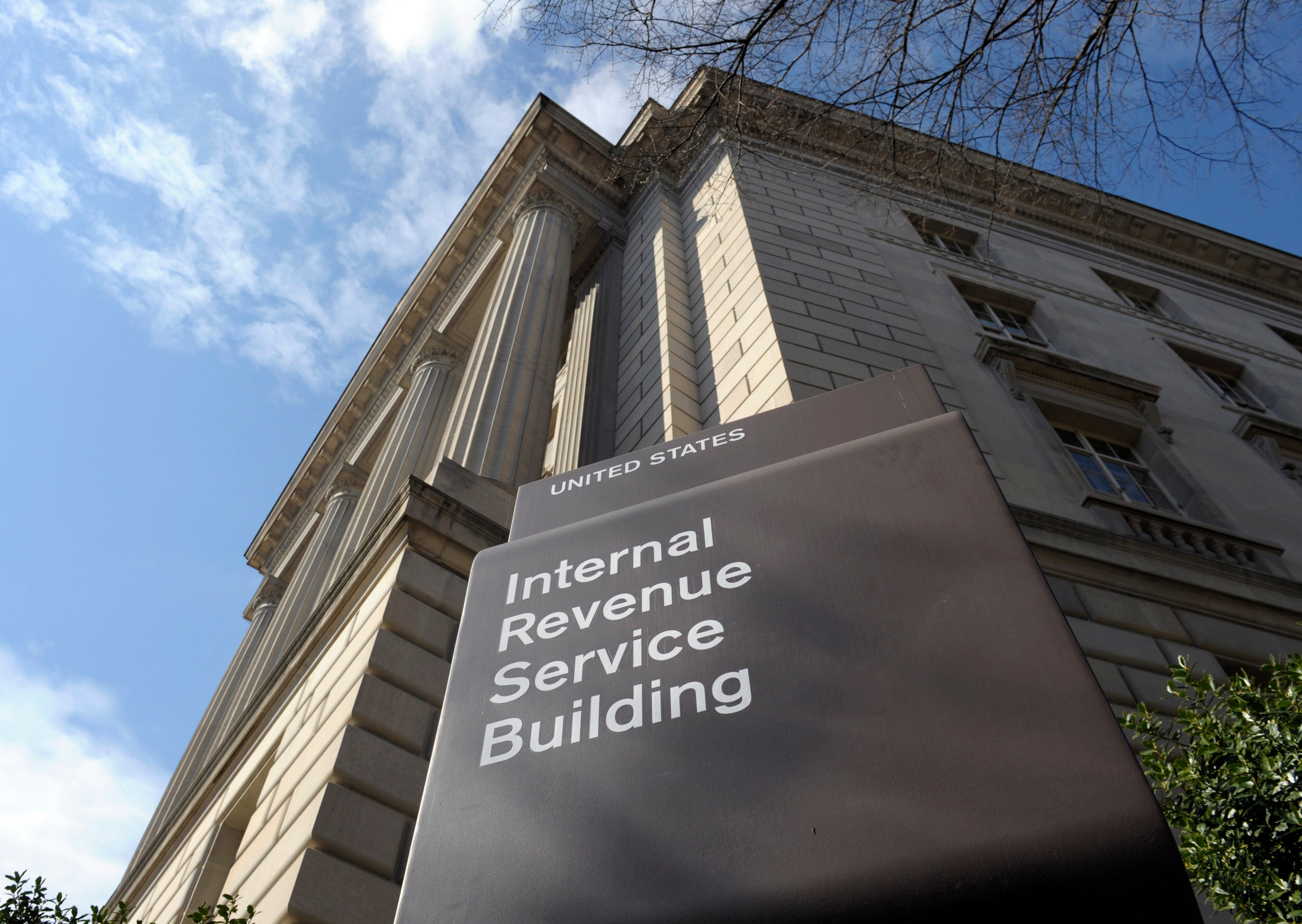
IRS audit rates for all taxpayers remain relatively low. According to IRS data, fewer than 0.5% of individual returns are audited annually, and overall business audit rates have declined as IRS staffing has been reduced. DOGE-driven staffing cuts in 2025 reduced the number of IRS revenue agents by approximately 31%, according to compliance reporting.
But the relevant statistic for foreign-owned businesses is not the average audit rate. International returns with complex cross-border structures, related-party transactions, and information return obligations face meaningfully higher scrutiny than a straightforward domestic return.
The automated systems that flag mismatches do not require revenue agents. They operate at scale regardless of staffing levels.
The risk for foreign-owned businesses is not primarily that the IRS will show up for a field audit. It is that an automated system flags a mismatch or a missing form, triggers a correspondence notice, and the business does not know how to respond or did not know the obligation existed in the first place.
For context on the broader US tax environment that international businesses are operating in right now, read our breakdown of what Trump’s tax plans mean for businesses in the United States.
How Foothold America Supports Your US Compliance
Foothold America is not a tax firm and does not provide tax advice. What we do is make sure the operational foundation of your US business is built correctly from the start: the right entity, the right payroll and benefits structure, the right bookkeeping, and the right connections to qualified US tax and legal professionals who understand international structures.
Our bookkeeping services for international companies are designed specifically for the compliance requirements that foreign-owned businesses face. We work alongside your US CPA to make sure your records are clean, your intercompany transactions are documented, and your annual obligations are tracked. Our guide on setting up US books that scale with your American expansion explains exactly what that looks like in practice.
Our US Entity Setup service includes guidance on entity structure, EIN acquisition, and registered agent services across all 50 states. Getting the structure right from the start reduces compliance complexity significantly.
If you are considering US expansion or have already established a US presence and want to make sure your compliance is in order, contact Foothold America. We will connect you with the right people and make sure your operational infrastructure does not become the source of the problem.
This article is for informational purposes only and does not constitute legal, tax, or financial advice. Foothold America is not a tax advisory firm. Please consult a qualified US tax attorney or CPA for advice specific to your situation.