

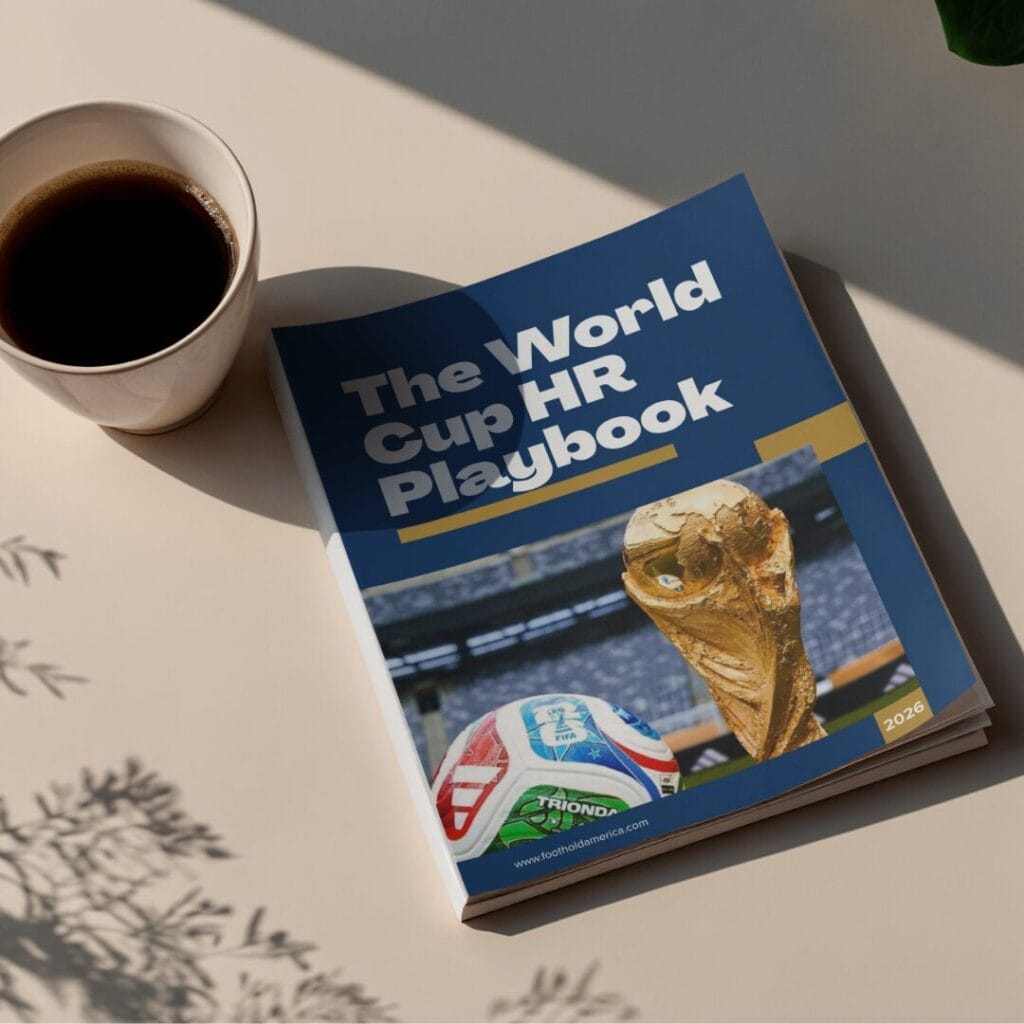
Episode 6 of 6 in The World Cup HR Playbook
Matches were played in the United States across 39 days. Billions of people followed the tournament globally. Millions of US workers watched at least part of it, many during matches that fell squarely inside their working hours.
This is the closing episode of our six-part series. We started six weeks ago with a question: how should international managers think about their US teams during the 2026 World Cup? Today we look back at what worked, what did not, and what international employers should take into the rest of 2026 and the years that follow.
Read the Full World Cup HR Playbook Here:
- Episode 1: Managing US Employees Through the 2026 World Cup
- Episode 2: Why American Workers Treat the World Cup Differently to Europeans
- Episode 3: How to Handle World Cup PTO Requests From Your US Team
- Episode 4: How to Run an Inclusive World Cup Watch Party at Work
- Episode 5: Managing World Cup Rivalries and Banter in a Multinational Office
What we learned

Six observations from six weeks of conversations with our clients, our team, and the broader community of international managers running US operations.
One: the multicultural workforce was the real story. Most European executives we spoke with came into the tournament expecting it to be about USA matches and American soccer culture. By week three, almost everyone had updated that view. The thing that mattered most inside US workplaces was not the USA team’s run. It was the dozens of small moments when a colleague’s country was playing, and the manager’s response to those moments. The companies that paid attention to plural home teams came out of the tournament with stronger relationships across their workforce. The ones that defaulted to a USA-only frame missed most of what was happening.
Two: clear policies beat generous policies. Several of our clients started the tournament with informal “take what you need” approaches and ran into problems by the knockouts. The companies that did better had clear, written policies on PTO, watch parties, and match-day flexibility, applied consistently across the workforce. Generosity without structure produced confusion. Structure with reasonable accommodation produced trust.
Three: managers who engaged outperformed managers who performed engagement. There is a difference between a manager who asks a colleague about their team because they are curious and a manager who asks because they read in an HR newsletter that they should. US employees can tell the difference inside two seconds. The managers who came out of the tournament with the strongest team relationships were the ones who took an actual interest, not the ones who deployed cultural awareness as a performance.
Four: the productivity hit was smaller than expected, and the cultural payoff was larger. We surveyed clients informally during the tournament. The productivity drop most companies experienced during major matches was real but modest, in the range of a typical Friday afternoon. The cultural impact of how the company handled the tournament was significantly larger and longer-lasting. The math on accommodating reasonable World Cup engagement is clearly positive.
Five: small gestures mattered more than big ones. A 90-minute watch party in a conference room with pizza did more for team culture than an elaborate company-wide celebration. A manager who moved a Tuesday meeting because they noticed it conflicted with the Mexico match earned more goodwill than a manager who hosted a polished company-wide event but scheduled critical calls during important matches. Sustained attention beat occasional grand gestures.
Six: the rivalry management challenge was real. The cases where banter crossed into harassment were uncommon but not rare. Managers who intervened early when patterns emerged kept their teams healthy. Managers who let things drift hoping they would self-resolve generally found they did not.
What worked

Three patterns emerged across the companies that handled the tournament well.
They planned in advance. Calendar audits in early June, written PTO policies before the first big match, watch party schedules for matches that mattered to their workforce, manager briefings on how to handle banter. The work happened before kickoff, not in response to problems.
They were consistent. USA matches, England matches, Mexico matches, Korea matches, Brazil matches were all treated under the same policy framework. Employees noticed. Consistency across nationalities was the single biggest predictor of how the tournament was experienced inside a workforce.
They engaged with curiosity, not performance. Senior leaders who asked about their team’s countries, who learned a few things about football cultures different from their own, who took small moments to acknowledge what was happening, built trust that was visible in the room. The performance of engagement, by contrast, generally rang false.
What did not work
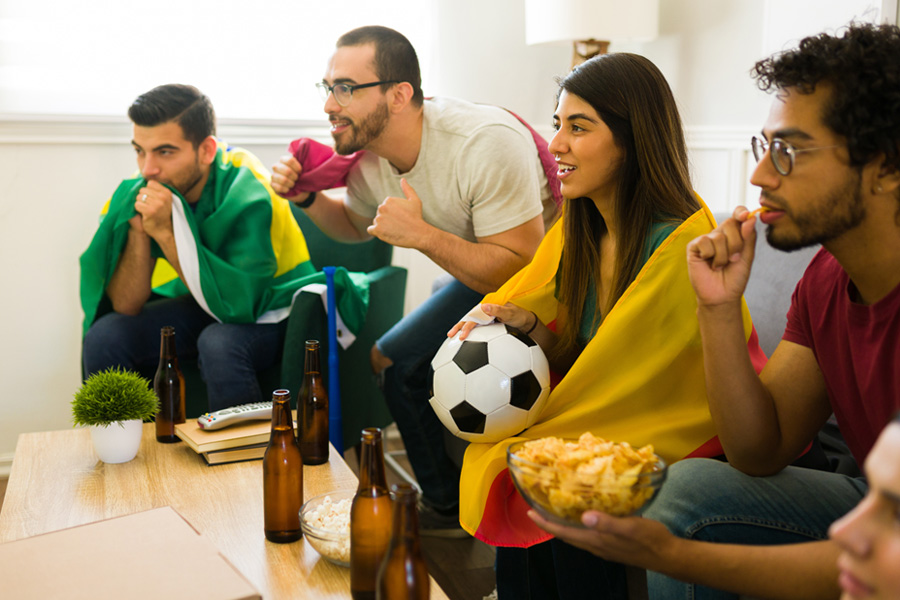
Three patterns also emerged across the companies that struggled.
The leadership-tournament was visible from the outside. When the company’s tournament celebration centred on a senior executive’s home country, while quietly ignoring the matches that mattered to the rest of the workforce, employees noticed. We saw multiple companies where this dynamic produced visible disengagement from non-favoured groups by the quarter-finals.
Rigid policies applied without judgement created resentment. “No PTO for sporting events” is a defensible policy in the abstract. Applied to an employee whose country had just reached the semi-finals of the World Cup, on home soil, for the first time in their professional life, it looked petty. Several of the companies that pursued this approach lost senior US employees in the months that followed.
Silence read as indifference. A few international companies decided to treat the tournament as background noise and made no acknowledgement of it whatsoever. In a country where around 87 million Americans had expressed interest in the tournament before it even started, where Fox Sports broadcast 70 matches on network television, where every host city visibly mobilised around the event, corporate silence read as disengagement from the country itself. Employees noticed that too.
What this means for the rest of 2026 and beyond
The World Cup was a concentrated cultural moment, but the underlying dynamics it surfaced are not going away.
Your US workforce is multicultural. The next big tournament, the next election cycle, the next national moment of attention will produce similar workplace dynamics. The Olympics come to Los Angeles in 2028. The Cricket World Cup is partly hosted by the US in 2031. Both will surface the same questions about how to manage culturally significant moments inside a diverse workforce.
The international managers who came out of the 2026 World Cup with stronger US teams did not get lucky. They paid attention, they planned ahead, they engaged with curiosity, they applied policies consistently, and they intervened when banter started to drift. None of that is football-specific. It is just good management, made visible by a moment that put cultural diversity at the centre of every workplace.
The broader lesson is simple. Running a US business as an international company means running a culturally diverse workforce inside a culturally specific country. The teams that take that seriously outperform the ones that treat it as background. The tournament showed that clearly. The rest of the calendar will keep showing it.
Closing the series
Thank you for reading along with this series over the last six weeks. We have appreciated the conversations, the questions, and the stories you have shared with us along the way.
If you took one thing from this series, we hope it is this. Managing a US team well is not about applying a European playbook to American employees, and it is not about pretending cultural differences do not exist. It is about paying attention, planning ahead, and treating your team’s diversity as the asset it actually is.
The next big moment is closer than you think. We will see you in the next one.
–
Our US Cultural Intelligence Advisory
This series draws on the work of global executive trainer Maureen Mitchell, who leads our US Cultural Intelligence Advisory programme. Maureen runs briefings, group advisory engagements, and one-to-one executive coaching for international leaders managing American teams. If you would like to talk, find Maureen at footholdamerica.com/us-cultural-intelligence-advisory.