

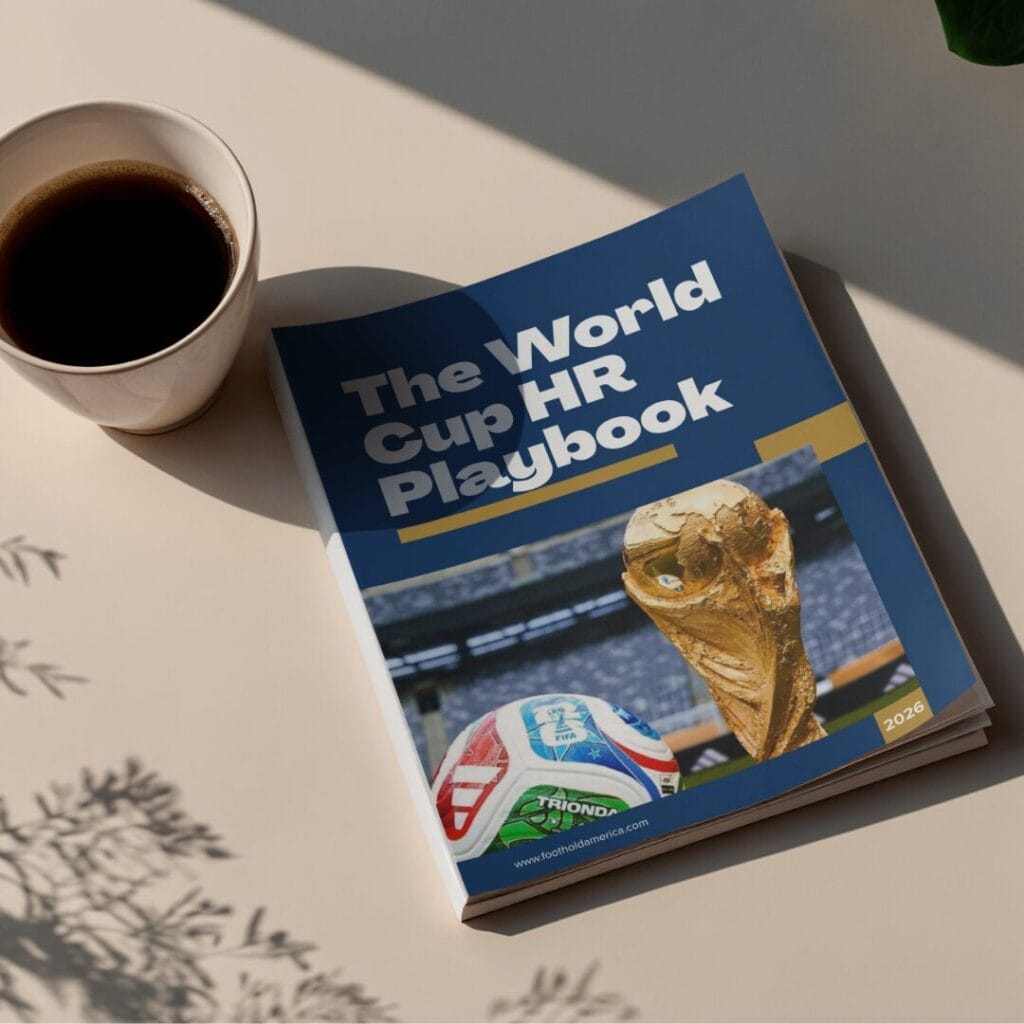
Episode 4 of 6 in The World Cup HR Playbook
We are in the Round of 32. The group stage produced its surprises and its disappointments. Some teams your US employees were quietly hoping for are out. Others your team did not know they cared about are still in.
This is the moment companies decide whether to host workplace watch parties for the knockout rounds. Done well, a watch party is one of the best culture-building moments of the year. Done badly, it produces awkward photos, HR complaints, and stories employees tell for years.
If you are joining the series here, it is worth starting with the earlier episodes on managing US employees through the 2026 World Cup, why American workers treat the World Cup differently to Europeans, and how to handle World Cup PTO requests from your US team: all three give useful context before diving into the operational detail below.
Today’s episode is the operational playbook.
Why watch parties matter
A workplace watch party signals three things to your US team. First, that the company recognises what is happening in the country it operates in. Second, that diverse interests across your workforce are worth marking, not just the ones that come from leadership’s home culture. Third, that the company is willing to spend small money on small moments that matter.
The cost is tiny. A conference room booking, some food, a screen people can see. The cultural payoff outlasts the tournament by months.
The mistake international employers make is treating watch parties as a marketing exercise rather than an employee experience exercise. A watch party that gets photographed for the company LinkedIn page but feels forced in the room has not worked. The room is what matters.
Which matches to host
Not every match needs a workplace screening. The principle we use is: host watch parties for matches that meaningfully connect to your workforce.
For most US-based international companies, that means three categories. The first is USA matches. Whatever your views on American soccer, the USA team playing in a home World Cup is a moment your US employees will mark. Hosting a screening signals that the company is part of the country it operates in.
The second is matches involving teams that are home countries for significant numbers of your employees. If you have a meaningful Mexican-American population, host Mexico matches. If you have UK, German, French, Korean, Colombian, Portuguese, or Spanish employees, host those matches too. Plural home teams is the modern US workforce reality, and your watch party schedule should reflect it.
The third is the major matches with broad cultural reach. The final, obviously. The semi-finals if your team has been engaged through the tournament. Occasionally a quarter-final that has captured wide attention.
What you do not need to host is every match. Selective and meaningful beats detailed and exhausting.
The operational checklist
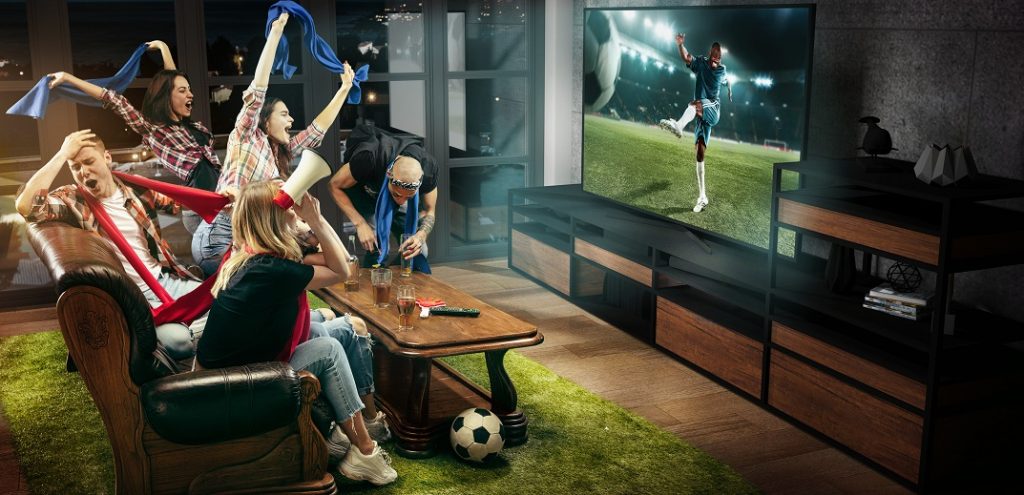
Once you have decided which matches to host, the logistics matter. Here is the checklist we share with clients.
Space. A conference room with a screen big enough that twenty people can see the action without crowding. If you do not have one, a casual area near a TV works better than a formal boardroom. The vibe should be relaxed, not corporate.
Time. Block the match window plus 15 minutes either side. People need time to arrive, settle, and discuss afterwards. A match that runs to penalties needs flex built into the calendar.
Food and drink. Modest catering, themed where it makes sense. Tacos and Mexican beer for Mexico matches. Pizza for almost anything. Coffee and pastries for early kickoffs. Water and soft drinks always available alongside alcohol if you serve any. The food does not need to be expensive. It needs to be there.
Alcohol. This is the most-asked question. Our view: serve modestly, late in the day where possible, and follow your existing workplace alcohol policy. Some companies do not serve alcohol at work. Stick to that. Companies that do serve at occasional events should treat the World Cup the same way. What you should not do is improvise. Set the rule, communicate it, and apply it consistently.
Remote workers. Send the meeting link. Stream the watch party on Zoom or Teams so remote employees can join. Pay for delivery food or a stipend for remote staff so they can participate from home. Remote employees notice when in-office events exclude them, and the World Cup is a particularly visible example.
Optional attendance. Always optional, never compulsory. The colleague who would rather work through the match should feel zero pressure to attend. Forced fun is not fun.
What to avoid

Three watch party patterns produce HR problems. We have seen each of them.
The leadership-themed watch party. When a senior executive’s home country is playing and the company puts on a big screening for that match alone, ignoring matches that matter to the rest of the workforce. This reads as favouritism and lands badly.
The USA-only celebration. When the only matches the company hosts are USA games, despite a significantly multicultural workforce. Other employees notice that their teams are invisible to the company.
The competitive betting pool. Office betting pools on match results are common and mostly fine, but they sit in a grey legal area in some US states and can produce complaints when stakes get serious or when employees feel pressured to participate. Keep pools casual, no money, low stakes, optional. Or do not run them at all.
The hosting conversation
One of the best things a manager can do during a watch party is the right kind of conversation. Some employees will want to talk about the match. Others will want to talk about anything else. Read the room.
What works well is asking employees about their team without testing them on it. “Are you watching the Korea game tomorrow?” is a fine question. “So how is Korea’s defensive shape looking against the high press?” is not, unless you actually know what you are talking about. Real curiosity beats performed expertise.
For European executives in particular, a watch party is also a chance to learn about a country’s football culture rather than impose your own. The way Americans engage with soccer is not wrong because it is different from the way Italy or Argentina engages with it. Watch how your US team watches.
A final thought before the knockout drama peaks
The Round of 16 starts this weekend. The quarter-finals are next week. By the time we publish Episode 5, your team will have lived through several rounds of high-stakes drama, surprise results, and at least one moment where someone was inconsolable at their desk.
Watch parties are a good way to hold those moments together. They turn what could be a distraction into a shared experience.
We will see you next Wednesday for Episode 5 on managing multinational rivalries, banter, and productivity during the deep knockouts.
Enjoy the football.
Our US Cultural Intelligence Advisory
This series draws on the work of global executive trainer Maureen Mitchell, who leads our US Cultural Intelligence Advisory programme. Maureen runs briefings, group advisory engagements, and one-to-one executive coaching for international leaders managing American teams. If you would like to talk, find Maureen at footholdamerica.com/us-cultural-intelligence-advisory.
Read the Rest of the World Cup HR Playbook Here:
Episode 1: Managing US Employees Through the 2026 World Cup
Episode 2: Why American Workers Treat the World Cup Differently to Europeans
Episode 3: How to Handle World Cup PTO Requests From Your US Team
Episode 5: Managing World Cup Rivalries and Banter in a Multinational Office
Episode 6: What International Managers Learned From the 2026 World Cup