

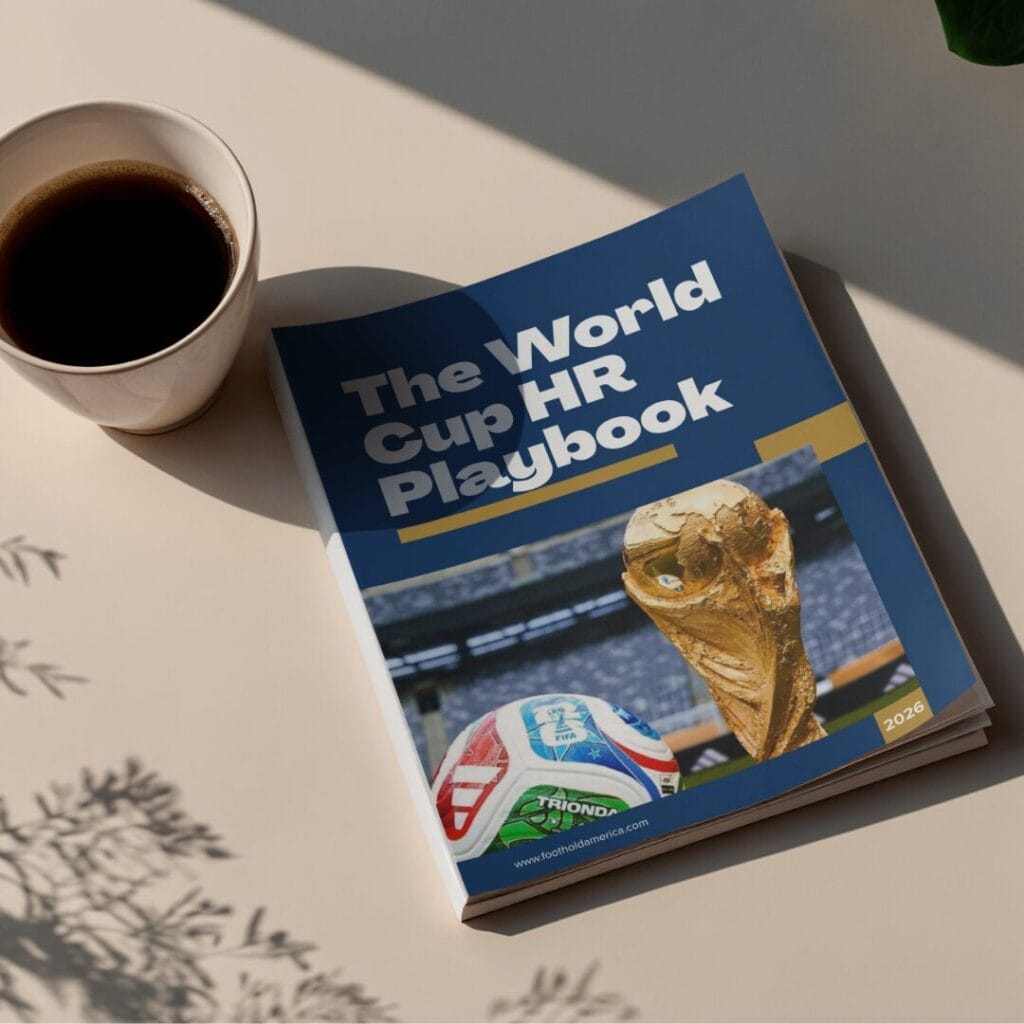
Episode 5 of 6 in The World Cup HR Playbook
We are in the quarter-finals. The semi-finals are next week. By now, your team has lived through eliminations, surprise winners, and at least one match that went to penalties and produced a Slack channel meltdown.
This episode is for the multinational office, the one with employees from a dozen countries sitting in the same Zoom calls and the same lunch room. The deep knockouts are when banter, rivalry, and emotional investment peak. They are also when most managers underestimate what their team is actually navigating.
What is actually happening in the room
In the group stage, banter is light. Everyone is still in. Optimism is cheap.
By the quarter-finals, the dynamic shifts. Teams are out. Hopes are concentrated. The colleague whose country was knocked out in the last 16 is now backing a different team or quietly checked out. The colleague whose country is still in is more invested than usual. The colleague who never cared in the first place is wondering when the office will return to normal.
The banter gets sharper. Most of it stays good-natured. Some of it does not. And the line between the two depends almost entirely on how your team’s culture has been managed through the previous weeks.
The banter spectrum
There is a spectrum, and managers need to know where on it their team is operating.
At the healthy end, banter is light, mutual, and respectful. Someone teases an English colleague about another tournament exit on penalties, and the English colleague laughs and points out the German team’s recent form. No one is hurt. The next day, the same two people are collaborating on a deck.
In the middle, banter starts to feel one-sided. A team or nationality becomes the recurring target. The jokes are technically still about football, but they land differently when one person is making them and another is hearing them. Productivity does not drop, but the room feels less comfortable.
At the unhealthy end, banter has become harassment dressed up as humour. National stereotypes appear. Comments cross into ethnicity, accent, religion, or immigration status. The targeted employee withdraws. Others stop participating in casual conversation. Engagement scores will drop in the next survey.
Most multinational offices stay safely in the first zone. A few drift into the second without realising it. A handful end up in the third and only notice when a complaint reaches HR.
What managers should be doing right now
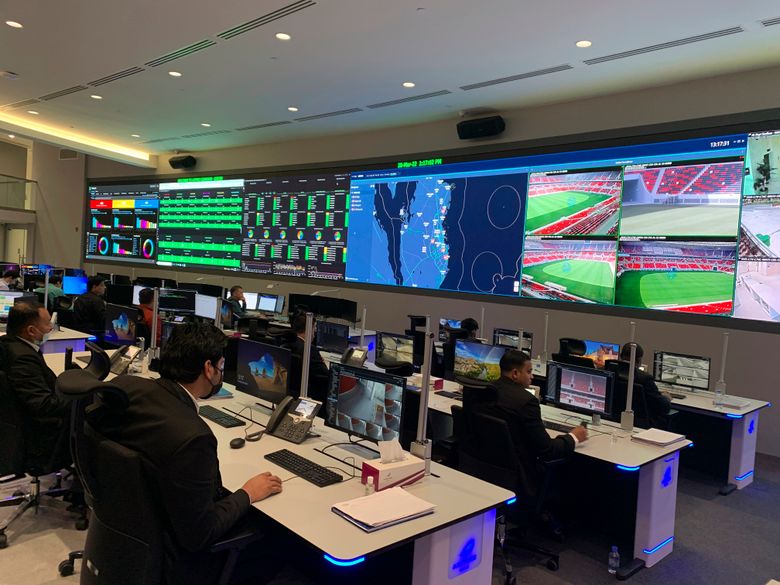
Three behaviours separate the managers who navigate this well from the ones who do not.
Pay attention to who is not laughing. Banter only works when everyone in earshot is in on the joke. The colleague who has gone quiet during football chat, who avoids the watch party, who suddenly takes lunch alone, is telling you something. A short, private check-in goes a long way. “How are you finding the tournament chat in the office?” is enough.
Intervene early, not late. The cost of a quiet word with one team member after one inappropriate comment is almost nothing. The cost of letting a pattern build for three weeks before addressing it is high. Most managers wait too long because they do not want to seem humourless. By the time intervention feels obviously necessary, the room has already changed.
Model the behaviour you want. Your team watches what you do, especially around culturally loaded moments. If you make football jokes that target a specific nationality, you have licensed others to do the same. If you ask employees about their teams with real interest and treat eliminations with sympathy rather than mockery, you set the tone.
The productivity question
Productivity will be down on match days. We covered this in Episode 2 and there is no need to relitigate it. What is worth saying here is something different. The productivity dip in the knockouts is sharper than in the group stage, and it has an emotional component the group stage did not.
When your country is knocked out of the World Cup, you are not productive for an hour or two afterwards. This is universal. It applies to Americans whose team has just lost. It applies to Brazilians, Argentinians, Germans, French, English, and everyone else. The colleague who has just watched their team go out on penalties is not going to deliver a sharp client presentation in the 30 minutes that follow.
Build for this. If you can move the meeting, move it. If you cannot, accept that someone will be off their game and do not hold it against them.
The mirror dynamic is also real. The colleague whose team has just advanced to the semi-finals is going to be elevated for the rest of the day. Use that energy. Schedule the brainstorm. Celebrate the win briefly before getting back to work.
Remote and hybrid teams
The multinational dynamic plays out differently for remote teams. Banter happens in Slack channels, Teams chats, and group emojis. The same spectrum applies, but the evidence is more public and more permanent.
A few practical observations:
The football-related channel that gets created at the start of the tournament can be a positive force or a negative one, depending on how it is managed. Either appoint a moderator or set a clear charter at the beginning. Letting it run with no oversight is what produces the harassment cases.
Public team channels are not the place for personal football banter. The temptation to make a quick joke in the engineering channel about a colleague’s team feels harmless in the moment, but it lives in the channel forever and is visible to people who never opted in. Keep it to dedicated channels or DMs.
Emoji reactions are not always as light as they feel. A pile of laughing emojis on a post about someone’s national team losing is funny if the person posting is the colleague in question. It is something else if a dozen people are piling onto a comment that has clearly landed badly.
Looking ahead to the final stretch
The semi-finals are next Tuesday, 14 July. The final is Sunday 19 July. The next 11 days will produce the most intense engagement of the tournament so far.
For most multinational teams, this stretch is where the real test happens. The teams still in produce concentrated emotion. The teams out produce checked-out colleagues. The matches themselves land in working hours for almost everyone in the US.
Manage carefully. Communicate often. Cut some slack where you can.
We close the series on 22 July with a synthesis episode three days after the final. We will look back at what worked, what failed, and what international managers should take into the rest of 2026 and beyond.
See you then.
Our US Cultural Intelligence Advisory
This series draws on the work of global executive trainer Maureen Mitchell, who leads our US Cultural Intelligence Advisory programme. Maureen runs briefings, group advisory engagements, and one-to-one executive coaching for international leaders managing American teams. If you would like to talk, find Maureen at footholdamerica.com/us-cultural-intelligence-advisory.
Read the Rest of the World Cup HR Playbook Here:
Episode 1: Managing US Employees Through the 2026 World Cup
Episode 2: Why American Workers Treat the World Cup Differently to Europeans
Episode 3: How to Handle World Cup PTO Requests From Your US Team
Episode 4: How to Run an Inclusive World Cup Watch Party at Work
Episode 6: What International Managers Learned From the 2026 World Cup