

Here’s what surprises most European companies about US federal holidays. They aren’t mandatory. Unlike in Germany, France, or the Netherlands, American private employers can legally require staff to work on Christmas, Thanksgiving, or any federal holiday. In 2026, there are 11 federal holidays, but your US operations can stay open for all of them if you choose. Understanding this flexibility and when to use it is critical for international businesses managing American teams.
2026 US Federal Holiday Calendar
Date | Day | Holiday | Banking Impact |
January 1 | Thursday | New Year’s Day | Banks closed |
January 19 | Monday | Martin Luther King Jr. Day | Banks closed |
February 16 | Monday | Presidents’ Day | Banks closed |
May 25 | Monday | Memorial Day | Banks closed |
June 19 | Friday | Juneteenth | Banks closed |
July 3 | Friday | Independence Day (observed) | Banks closed |
July 4 | Saturday | Independence Day | Banks closed |
September 7 | Monday | Labor Day | Banks closed |
October 12 | Monday | Columbus Day | Most banks closed |
November 11 | Wednesday | Veterans Day | Banks closed |
November 26 | Thursday | Thanksgiving | Banks closed |
December 25 | Friday | Christmas Day | Banks closed |
The Critical Difference Between Mandatory and Optional Holidays
If you’re expanding from Europe, this will feel backwards. In most EU countries, national holidays are protected by law. German employees get nine guaranteed public holidays. French workers have 11 mandatory days off. The UK requires eight bank holidays for most workers.
In the US? Zero mandatory holidays for private-sector employees. The federal government designates holidays for its own workforce and banking institutions, but private companies make their own rules. You could theoretically open your US office on Thanksgiving, though you’d probably face a revolt.
This distinction matters for international hiring strategy and cultural expectations. European employees transferring to US roles often assume holiday protections transfer with them. They don’t.
What “Bank Holiday” Actually Means in America
The term “bank holiday” causes confusion for international business owners. In the UK and Ireland, it describes mandatory public holidays. In the US, it simply means banks close. Nothing more.
When Americans say “bank holiday,” they’re referring to days the Federal Reserve closes and commercial banks typically follow suit. Government offices close. Mail doesn’t get delivered. But private businesses? They decide independently.
Bank closures affect international payment processing significantly. Wire transfers stop completely on holidays. If you’re funding US payroll from Europe, initiate transfers by Thursday morning for Friday holidays to avoid missing payroll. ACH transactions queue and process the next business day. International SWIFT transfers may show as “in progress” but won’t clear until US banks reopen.
Credit card processing continues normally. Card networks operate independently of the Federal Reserve system. The US banking system operates differently from European infrastructure, particularly around real-time payments and holiday processing.
State-Specific Holidays That Complicate Multi-State Operations
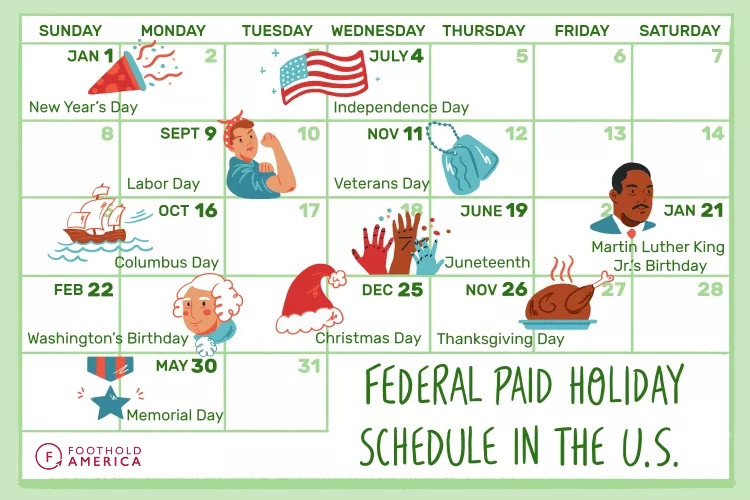
Federal holidays apply nationwide, but states add their own complications. This creates real headaches for international businesses running operations across multiple US states. What works in Texas doesn’t match expectations in Massachusetts. What matters in Hawaii means nothing in Alaska.
State | Holiday | Date in 2026 | Observance Level | Business Impact |
Massachusetts | Patriots’ Day | Monday, April 20 | State offices close, many private employers close | Boston Marathon runs, city effectively shuts down |
Maine | Patriots’ Day | Monday, April 20 | State offices close | Moderate private sector observance |
Texas | Texas Independence Day | Monday, March 2 | State offices close | Minimal private sector impact |
California | Cesar Chavez Day | Tuesday, March 31 | State offices and schools close | Childcare coverage issues for employees |
Hawaii | Prince Kūhiō Day | Thursday, March 26 | State offices close | Common among Hawaii-based companies |
Alaska | Seward’s Day | Monday, March 30 | State offices close | Rare private sector observance |
Louisiana | Mardi Gras | Tuesday, February 17 | New Orleans shuts down | Extended closures in New Orleans area |
Rhode Island | Victory Day | Monday, August 10 | State offices close | Rhode Island specific, minimal impact elsewhere |
Nevada | Nevada Day | Friday, October 30 | State offices close | State-specific observance |
Multiple | Day After Thanksgiving | Friday, November 27 | 24 states observe as state holiday | Widespread closures even where not mandatory |
- Massachusetts observes Patriots’ Day on the third Monday in April. That’s April 20 in 2026. State government offices close. Many private employers in the Boston area close as well, particularly financial services firms and larger corporations. The Boston Marathon runs on Patriots’ Day. The entire city essentially shuts down. If you’re operating in Massachusetts, you need to account for this. Employees expect it off. Customers expect you to be closed. Maine also observes Patriots’ Day with similar but less intensive local impact.
- Texas celebrates Texas Independence Day on March 2, commemorating independence from Mexico in 1836. State government offices close. Private employers rarely observe it. Some companies with strong Texas roots give employees the day off. If you’re hiring in Texas, ask candidates about their previous employer’s policy on this holiday. It signals what they expect.
- California adds Cesar Chavez Day on March 31. State offices close. Many school districts close. Private employers typically don’t observe it. However, employees with school-age children may request time off for childcare coverage. This creates scheduling complications even if you don’t officially close.
- Hawaii observes Prince Kūhiō Day on March 26, honoring Prince Jonah Kūhiō Kalanianaʻole. State government closes. Private sector observance is optional but common among Hawaii-based companies. If you’re running operations in Honolulu, expect employees to ask for this day off.
- Alaska has Seward’s Day on the last Monday in March. That’s March 30 in 2026. State government closes. Private employers rarely observe it unless they have contracts with state agencies requiring coordination around state closures.
- Louisiana treats Mardi Gras as a de facto holiday, though it’s not federally designated. In New Orleans, the city effectively shuts down for several days. In 2026, Mardi Gras falls on February 17, which coincides with Presidents’ Day. If you’re operating in Louisiana, particularly New Orleans, plan for extended closures around this date. The cultural significance makes it impossible to maintain normal operations.
- Rhode Island uniquely celebrates Victory Day on the second Monday in August. That’s August 10 in 2026. This commemorates the end of World War II. State offices close. It’s one of the few state-specific holidays that doesn’t appear anywhere else in the country.
When you’re using an Employer of Record service to hire in multiple states, holiday expectations may vary by location. A Massachusetts employee might expect Patriots’ Day off. A Texas employee won’t. A Hawaii employee expects Prince Kūhiō Day. An Alaska employee won’t. Your PEO or EOR provider should advise on regional norms. The challenge is maintaining consistency across states while respecting local expectations.
Designing Your Holiday Policy for American Operations

Option 1 is matching all federal holidays.
Close for all 11 federal holidays. Offer paid time off for each. This approach costs you 11 days of productivity but eliminates confusion and aligns with most large American employers.
This works best for companies hiring white-collar professionals in competitive markets, businesses targeting American enterprise clients, or European companies wanting familiar holiday structures.
Option 2 focuses on essential holidays only.
Close for six major holidays. New Year’s Day, Memorial Day, Independence Day, Labor Day, Thanksgiving, and Christmas. Stay open for the other five federal holidays.
This works best for startups conserving cash, manufacturing operations needing consistent production, or businesses serving European clients who need US support during American holidays.
The cost is 6 days times $500 daily labor cost times 50 employees. That’s $150,000 annually, saving $125,000 compared to Option 1.
Option 3 uses floating holidays.
Close for three non-negotiable holidays. Thanksgiving, Christmas, New Year’s Day. Give employees 5-8 floating holiday days they can use when they choose.
This works best for diverse workforces, companies with global teams needing coverage continuity, or businesses wanting to avoid cultural assumptions about which holidays matter.
An employee who doesn’t celebrate Christmas can use floating days for Diwali or Rosh Hashanah. An employee in Massachusetts can use one for Patriots’ Day. Someone who values long weekends can cluster floating days around federal holidays.
The cost is similar to Option 2, but employee satisfaction improves because people value choice.
What Your Employment Letter Must Address
US employment law doesn’t require you to mention holidays in the employment letters at all. This shocks international employers. In most European countries, holiday entitlement is statutory and must appear in employment agreements.
Your US employment agreements should specify which holidays your company observes, whether holiday pay is included or counts against PTO, expectations for employees working holidays (premium pay or comp time), and how holidays interact with remote work policies.
Without explicit language, you’ll face questions and inconsistent interpretations. US employment letters differ significantly from European agreements in structure and required terms.
The Paid Time Off Trap International Companies Fall Into
Here’s where international employers make expensive mistakes. If you offer “25 days off” without specifying what that includes, Americans will assume you mean vacation and sick leave combined, and they’ll still expect company holidays on top.
In most European countries, annual leave and public holidays are separate entitlements. Germany provides 20-30 days annual leave (depending on company policy) plus 9-13 public holidays depending on the state. The Netherlands mandates 20 days annual leave plus 8 public holidays. France requires 25 days annual leave plus 11 public holidays. Employees understand these are distinct categories.
The American system also separates these categories. Companies typically offer 10-15 vacation days, 5-10 sick days, and 6-11 company holidays as separate buckets. Total time off ends up similar to Europe at 25-35 days, but Americans expect clarity about which days are which.
The trap happens when you communicate poorly. If you tell an American candidate “we offer 25 days off” without clarifying that includes holidays, they’ll assume you mean 25 days of vacation and sick leave, and they’ll expect 10 company holidays on top of that. You intended 25 total days. They heard 35 days.
Structure your benefits clearly using American terminology. State “10 vacation days, 5 sick days, and we observe 10 company holidays” rather than offering a combined number. Or if you prefer a European-style integrated approach where your “25 days” includes everything, make that explicitly clear in offer letters. Don’t leave room for misinterpretation. Understanding US employment law helps avoid these costly misalignments when structuring compensation packages.
How International Competitors Handle US Holiday Policies
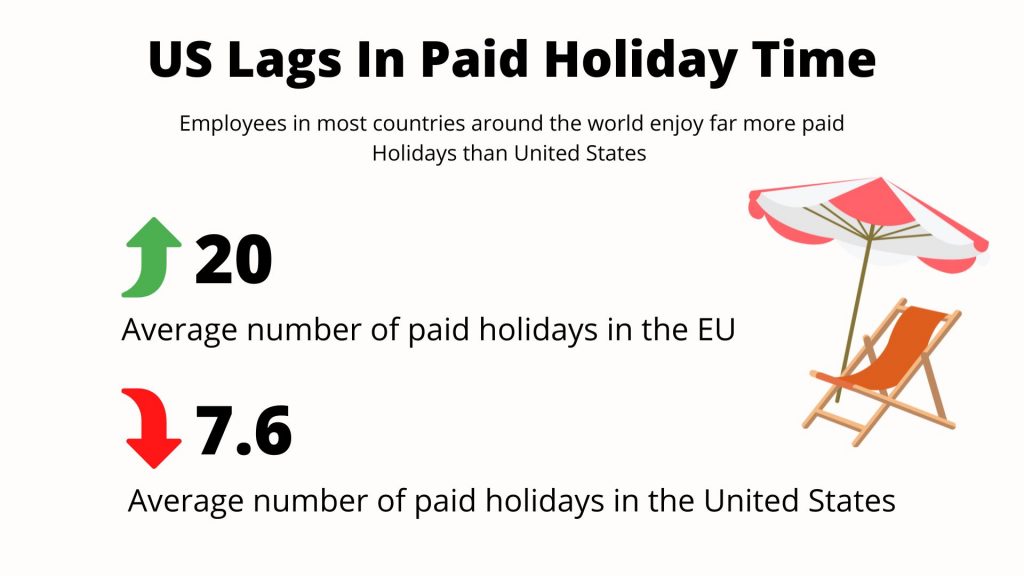
European companies in the US typically offer 10-12 observed holidays to compete for talent. Companies like Spotify, SAP, and Adyen have learned that matching American expectations matters more than replicating headquarters policies. They maintain European holiday calendars at headquarters while offering American-standard holidays to US employees.
Japanese companies operating in America often close for fewer holidays but offer more vacation days. This reflects their home market approach where extended vacation time matters more than individual holidays. Toyota, Honda, and Sony US operations typically observe 7-9 holidays but provide 15-20 vacation days. This creates culture shock for American employees expecting standard holiday schedules of 10-11 observed days.
Australian companies frequently struggle with the holiday timing difference. Their fiscal year-end on June 30 conflicts with American mid-year planning cycles. Companies like Atlassian and Canva often create US-specific holiday calendars divorced from global headquarters closures. Their Australian offices close for different holidays at different times than their US offices. This requires careful coordination for global projects.
Canadian companies have the easiest transition. Canadian holidays largely align with American holidays. Canada Day on July 1 differs from Independence Day on July 4, but the timing is close enough that Canadian companies just close US offices on July 4 instead. Thanksgiving dates differ between Canada (second Monday in October) and the US (fourth Thursday in November), but both countries celebrate it and understand the cultural significance.
British companies struggle with the concept that holidays aren’t mandatory. In the UK, the eight bank holidays are guaranteed by law. British companies expanding to the US often initially try to mandate the same holidays for American employees. They learn quickly that Americans don’t recognize May Day (first Monday in May) or August Bank Holiday (last Monday in August). These dates mean nothing to American employees.
The lesson is clear. Your US operations need American-appropriate holiday policies, not headquarters-dictated schedules that ignore local culture. Run your UK office on UK holidays. Run your US office on US holidays. Don’t try to force global consistency where it doesn’t make cultural sense.
Planning Your 2026 Calendar
In Q1 2026, avoid Martin Luther King Jr. Day on January 19 for major announcements or product launches. Presidents’ Day on February 16 creates a three-day weekend that many employees use for travel.
In Q2 2026, Memorial Day on May 25 marks the unofficial summer start. Americans expect long weekends for travel. Don’t schedule critical deliverables for May 26-28. Plan around this. Juneteenth on June 19 falls on a Friday, creating another natural long weekend.
In Q3 2026, Independence Day falls on Saturday July 4, so most businesses observe it Friday July 3. Give your team July 3-6 off if possible. Labor Day weekend from September 5-7 is similarly protected. Americans travel, host barbecues, and generally consider these weekends off-limits for work commitments.
In Q4 2026, the week of Thanksgiving from November 23-27 is functionally lost. Many companies give both Thursday and Friday off as standard, even though only Thursday is a federal holiday. Don’t schedule important meetings, product launches, or critical deadlines during this week. Christmas falls on Friday December 25. Expect December 24-28 closures at minimum. Many companies close entirely December 24 through January 1.
For international businesses managing cross-border teams, this calendar creates coordination challenges with European operations running normal schedules during American holidays. You need coverage plans. Clear communication about who’s working when. Systems that don’t depend on real-time collaboration during holiday weeks.
For non-retail companies, close for a minimum of the big six holidays Americans care about. New Year’s Day, Memorial Day, Independence Day, Labor Day, Thanksgiving, and Christmas. These are culturally non-negotiable. Consider the other five federal holidays based on your industry, competition for talent, and operational requirements.
Additional resources for international expansion include IRS guidance on employer responsibilities, US Small Business Administration planning resources, and the Federal holiday schedule official list.