



You hire a strong US-based manager. Within three months she is fielding client calls on a Sunday, sending Slack messages at 10pm, and attending an industry webinar on her lunch break. You wonder if something is wrong with the culture you are building.
Nothing is wrong. This is American work-life integration in action.
International employers often arrive in the US expecting to manage a balance between work and personal life. What they find instead is integration: a deliberate, often enthusiastic blurring of the line between the two. Understanding the difference, and what it demands from you as a leader, is one of the less obvious but genuinely important adjustments for international managers running US teams.
This guide breaks down how American work-life integration works, why it looks different from European and Asian models, and what international managers need to do differently to lead effectively within it.
It is part of our Mastering US Business Culture series, developed in partnership with Maureen Mitchell, a former PwC Director with over 30 years of experience helping international companies operate in the US. We also produced a 14-episode podcast series to go alongside this content. You can listen to the episode on US work-life integration here.
You may also find it useful to read the earlier blogs in this series:
US Communication Style: Direct Words, Diplomatic Delivery,
US Time Management: Why Speed Is a Leadership Signal,
US Leadership Hierarchy: Why Flat Does Not Mean No Authority
Balance Is Not the Goal. Integration Is.
The language matters here. Most European managers come to the US expecting to manage work-life balance, which implies two separate spheres that need to be kept in proportion. American employees are not operating from that model.
Integration assumes that work and life are not cleanly separable, and that trying to force them apart creates more friction than it resolves. A US employee who leaves at 5pm sharp and does not check email until 9am is not more balanced in the American sense. They are, in many workplaces, seen as less committed or less engaged.
This does not mean American employees work all the time. It means they have a different relationship with the boundary between work and personal life. They move between the two fluidly, and they often judge their employers by how much flexibility they are given to do so.
Maureen Mitchell, Foothold America’s Cultural Intelligence Advisor, sees this trip up international employers consistently: “European companies come to the US expecting their workforce policies to be more generous than the American norm, and in terms of holiday entitlement they often are. What they are not prepared for is the expectation that flexibility goes both ways. American employees want to be trusted to manage their own time, not just given more of it.”
That distinction is worth sitting with. Flexibility in the US is not primarily about time off. It is about autonomy over how and when work gets done.
What Changed and Why
The shift from balance to integration did not happen overnight, and understanding where it came from helps international managers navigate it more confidently.
American work culture has always leaned toward high commitment and long hours, particularly in professional services, technology, and finance. What changed significantly in the early 2020s was the collapse of the physical boundary between office and home.
Remote and hybrid work became standard across a wide range of industries, and the commute that once served as a hard edge between work time and personal time disappeared for millions of employees.
The result was not simply that people worked from home. It was that work and home became the same place, and employees developed highly personal rhythms for moving between the two. Some work intensely from 7am to 3pm and then collect their children.
Others take a long break in the afternoon and return to email in the evening. Others work four days at full capacity and protect the fifth for personal commitments.
What American employees want from their employers is not to be told which of these patterns is correct. They want to be judged on their output and trusted to manage the process themselves.
The Four Pillars of American Work-Life Integration

The Cultural Intelligence framework developed with Maureen Mitchell identifies four areas where American work-life integration has the most direct impact on how you lead and manage a US team.
Flexible work policies are expected across most professional roles in the US today. This is not a perk in most sectors. It is a baseline. International employers who arrive with fixed-hours policies that require presence between set hours, without flexibility for remote work or schedule variation, will find it harder to attract and retain strong candidates. The policy expectation has shifted, and competing for US talent means operating within that shift.
Results-oriented culture is the leadership principle that sits underneath flexibility. You can offer all the flexibility in the world, but if you are still measuring your US team by hours worked or time at a desk, you are operating the wrong model. American managers are expected to define clear outcomes, communicate expectations, and then get out of the way. Checking in constantly to see if people are at their desks, or expecting to see a full inbox of activity before 9am, signals micromanagement. It will cost you talent.
Technology enablement is the infrastructure that makes integration possible. American employees expect their employers to provide the tools that allow them to work effectively from wherever they are. This means investment in collaboration platforms, reliable video conferencing, project management systems, and clear communication protocols that do not depend on physical presence. International companies that under-invest in this infrastructure find their US teams operating at a disadvantage relative to competitors.
Mental health support has shifted from a nice-to-have to a genuine expectation in the US workforce, particularly among employees under 40. American employers who provide employee assistance programmes, mental health days, and visible leadership support for wellbeing are not doing so out of charity. They are responding to a workforce that has made wellbeing a factor in employment decisions, and to a market where talent shortages mean that losing good people to burnout is an expensive problem.
What This Looks Like in Practice
The principles above translate into specific, observable expectations in the American workplace. Here is what international managers should expect to navigate.
Boundary-setting is the employee’s job, not yours. In the US, employees are expected to manage their own work-life integration. If an employee is working unsustainable hours, the leadership response is to address workload and outcomes, not to tell them to go home earlier. Employees who choose to work long hours, because they are genuinely engaged and find their work meaningful, are generally not seen as a problem. Employees who are burning out are, and that distinction requires different management.
Holiday entitlement is lower than most European norms, but the attachment to certain days is stronger. The average American worker receives ten to fifteen days of paid holiday per year, compared to twenty-five or more in many European countries. But the cultural significance of specific holidays, particularly Thanksgiving and the Fourth of July, is intense. International employers who schedule critical meetings or product launches during these windows will face significant pushback. The number of days matters less than respecting the days that matter.
Unlimited PTO is a real feature of many US benefit packages, not a gimmick. A growing number of American companies offer unlimited paid time off as a policy. The intention is to reinforce the results-oriented culture: take what you need, deliver what you committed to. International managers sometimes mistake this for a cost-saving measure or a trap. For many US employees, it is a genuine signal about the kind of employer they are dealing with.
Availability outside business hours is normalised but not unlimited. American employees are generally comfortable with occasional out-of-hours messages and calls, particularly when there is urgency or a time zone difference involved. What they are not comfortable with is a culture where out-of-hours communication is constant and expected, with no acknowledgement that it represents an imposition. The international manager who sends late-night messages expecting same-night responses, as a routine rather than an exception, will erode trust faster than almost any other behaviour.
How Work-Life Integration Compares Across Cultures
The table below shows how the same work-life leadership situation is typically handled across four business cultures. These examples come directly from the Cultural Intelligence framework developed with Maureen Mitchell.
American Executive | British Executive | German Executive | Japanese Executive |
“Results matter, not hours” | “Output is more important than hours” | “Performance determines success” | “Quality work honours our commitment” |
“Take the time you need” | “Please take whatever time is required” | “Use the time necessary” | “Please attend to your important needs” |
“Family comes first” | “Family obligations take precedence” | “Personal responsibilities are important” | “Family harmony supports work excellence” |
“Work where you’re effective” | “Work from wherever suits you best” | “Choose your optimal work location” | “Please work where you can best contribute” |
“Disconnect completely” | “Do switch off entirely” | “Maintain clear boundaries” | “Please honour your restorative time” |
“Flexible is better” | “Flexibility yields better outcomes” | “Adaptable scheduling improves results” | “Harmonious scheduling benefits everyone” |
The American phrases are warmer and more direct. They treat flexibility as a leadership value, not a concession. For international managers, the adjustment is learning to communicate flexibility as a default, not something employees need to negotiate for case by case.
Integration vs Balance: The Leadership Difference
The table below maps the difference between traditional balance-oriented leadership and the American integration model across the dimensions that matter most in practice.
Aspect | Traditional Balance Leadership | American Integration Leadership |
Employee Expectations | Clear work and personal boundaries | Flexible boundary management |
Performance Measurement | Hours and presence | Results and outcomes |
Scheduling Approach | Fixed schedules | Flexible, results-oriented |
Communication Style | Business hours only | Reasonable, respectful availability |
Success Metrics | Time investment | Value creation |
Employee Support | Standard benefits | Customised flexibility |
Career Development | Separate training and personal time | Learning integrated into workflow |
Meeting Culture | Rigid meeting schedules | Flexible timing around personal needs |
The right-hand column is not aspirational for most US employers. It is the baseline expectation in a competitive talent market. International managers who operate from the left-hand column will find their US teams looking at competitors who operate from the right.
Where International Managers Get This Wrong
There are four patterns that come up consistently when international employers struggle with US work-life integration.
Importing home-country policies without adaptation. A German company that brings its structured, hours-based work culture to a US team is not offering German discipline. It is offering a model that US employees will experience as inflexible and disrespectful of their autonomy. Policies need to be adapted to the US context, not simply translated.
Treating flexibility as a reward rather than a default. Some international managers offer flexible working as a benefit to be earned, either through seniority or strong performance. In the US, this model signals distrust. Flexibility is expected as a starting point, not something employees work toward. Withholding it sends the wrong message before you have even had a chance to assess performance.
Failing to model integration themselves. American employees watch how their leaders behave, not just what they say. An international manager who never takes time off, works every weekend, and sends emails at midnight is not modelling high commitment in the US context. They are modelling unsustainable behaviour that creates anxiety for their team. Visibly disconnecting, taking holidays, and respecting your own boundaries is a leadership act in the US.
Confusing availability with commitment. International managers who measure commitment by how available their US employees are, whether they respond quickly to messages, how often they are online, or whether they are in the office on Fridays, are using the wrong measure. US employees demonstrate commitment through the quality and impact of their work, not through visible presence. Managers who conflate the two will lose good performers who have better options.
The Work-Life Integration Self-Assessment
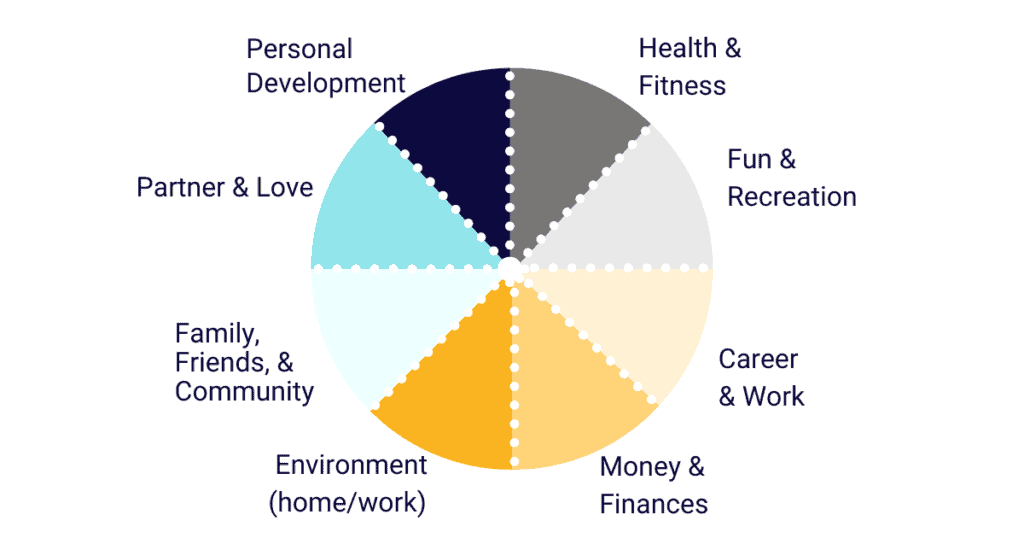
The Cultural Intelligence framework includes a self-assessment covering eight work-life integration competencies. Score yourself on a 1 to 5 scale.
- I model healthy work-life integration for my organisation
- I focus on results rather than hours worked
- I respect employee personal time while maintaining business needs
- I adapt to American expectations around flexible work arrangements
- I communicate availability and boundaries clearly
- I support employee work-life integration initiatives
- I balance global business demands with local work culture expectations
- I create organisational policies that support integration over balance
Scoring guide:
- 32 to 40: Excellent work-life integration leadership
- 24 to 31: Good foundation with room for policy refinement
- 16 to 23: Leadership approach needs significant modernisation
- Under 16: Critical gap in contemporary American leadership expectations
If you scored below 24, work-life integration is a priority area to address before scaling your US team.
Practical Adjustments That Make the Biggest Difference
You do not need to rebuild your entire HR policy framework overnight. A focused set of adjustments addresses most of the gap between where international employers typically start and where US employees expect them to be.
Shift your performance conversations to outcomes. Replace check-ins about hours and availability with conversations about deliverables, timelines, and impact. This single shift changes the management relationship significantly and signals to your US team that you are operating within their framework, not importing a foreign one.
Review your holiday and flexibility policies before your first US hire. It is significantly harder to revise policies downward once employees are in post than to launch with a competitive framework from the start. Research US market norms for your sector and state before finalising your employee handbook.
Make your own integration visible. Take your holiday entitlement. Mention it to your team. Respond to non-urgent messages during business hours rather than immediately when they arrive out of hours. These are not small gestures. They set the cultural tone for your US operation.
Build a clear communication protocol around out-of-hours contact. American employees are generally fine with occasional out-of-hours messages when there is a genuine reason. What they need is clarity about when that is the expectation and when it is not. A simple protocol, for example urgent only after 6pm, everything else waits until morning, removes the anxiety and sets a fair standard.
For more on how communication norms shape expectations in the US workplace, see our guide on US Communication Style: Direct Words, Diplomatic Delivery.
Listen to the Podcast
We produced a 14-episode Deep Dive podcast series alongside the Mastering US Business Culture content. The episode on US work-life integration covers what international employers get wrong about American flexibility, how to design policies that work in the US market, and what Maureen Mitchell has seen make the biggest difference for leadership teams making this adjustment. Listen to it here.
Further Reading
- Harvard Business Review: The Case for Good Enough Work-Life Balance
- Gallup: State of the American Workplace
- McKinsey and Company: Flexible Working and Employee Experience
What Comes Next
US work-life integration is one of 14 areas covered in the Mastering US Business Culture series. The others include communication style, time management, leadership hierarchy, decision-making, feedback culture, legal and compliance culture, diversity and inclusion, sports culture, union and labor relations, holiday and vacation culture, conflict resolution, regional business differences, and professional etiquette.
Each blog in the series links back to the cornerstone guide. You can start with the full Mastering US Business Culture guide here.
How Foothold America Can Help
Work-life integration is not just an HR policy question. It shapes who you can hire, how long they stay, and whether your US operation builds the culture needed to compete effectively in the American market.
Our Cultural Intelligence Advisory service, led by Maureen Mitchell, works with international employers to design US people strategies that reflect American workforce expectations without losing sight of the values and standards that make your company distinctive.
If you are building a US team now or planning your expansion, get in touch with us here to talk through what support looks like for your business.
This blog is part of the Mastering US Business Culture series, developed in partnership with Maureen Mitchell, former PwC Director and Foothold America’s Cultural Intelligence Advisor.