



Your EOR was the right call.
When you hired your first US employee, you had no US entity, no EIN, and no idea how US payroll tax worked. An Employer of Record lets you move fast and hire compliantly without any of that infrastructure in place. It did exactly what it was supposed to do.
But the EOR model was built for a specific stage. It is the right tool for testing the US market, getting your first hires in place, and buying time while you decide whether the US is a long-term play for your business.
At some point, if the US is working, the EOR starts to become a constraint rather than a convenience. You have an entity now. Your team is growing. You are paying EOR margins on every employee and getting less flexibility than you need on benefits, policies, and employment terms. The tool that opened the door is now the thing standing in the way of building properly.
This is the moment to look seriously at PEO+.
This blog covers the specific signs that your EOR arrangement has run its course, what changes when you switch to PEO+, and what you need to have in place before you make the move.
First: Why the EOR Model Has Limits
An EOR is the legal employer of your US workforce. Your employees sit on the EOR’s payroll, under the EOR’s benefits plans, within the EOR’s compliance framework. You direct the work. The EOR owns the employment relationship on paper.
That structure works well when you do not have a US entity and need someone else to hold the legal employer responsibility. It is specifically designed for that situation.
But it comes with trade-offs that become more significant as you grow. You have limited control over benefits design. You are paying a margin on every employee that reflects the EOR taking on legal employer risk, risk that once you have a US entity you can manage yourself through a PEO at lower cost. Your employment agreements sit within the EOR’s framework rather than your own company’s. And if something goes wrong with an employee, the EOR’s process governs how it is handled, not yours.
None of that is a problem at employee one or two. By employee five or ten, it starts to matter. What is a PEO? Your Guide to Co-Employment in the USA explains the structural differences clearly if you want to get into the detail before reading on.
The 6 Signs You Have Outgrown Your EOR
1. You now have a US entity, EIN, and US bank account
This is the clearest trigger. Once these three things exist, you are eligible for a PEO. More importantly, continuing to use an EOR once you have a US entity means you are paying for legal employer infrastructure you no longer need, because you now have the entity to carry that responsibility yourself.
The IRS issues Employer Identification Numbers to US business entities, and an EIN is a prerequisite for running your own payroll, opening business accounts, and entering a PEO arrangement. If you have your EIN and your entity registered, the EOR model was built for a stage you have already passed. For a full breakdown of what the PEO model actually delivers once your entity is in place, Understanding PEO+ covers everything you need to know.
The commercial case for staying on EOR weakens with every employee you add after that point.
2. Your EOR costs are climbing and the maths no longer works
EOR pricing reflects the risk the EOR carries as your legal employer. Once you have your own entity and can carry that responsibility, you are still paying that risk premium without the underlying reason for it.
PEO+ pricing is typically a per-employee monthly fee or a percentage of payroll. For most companies with a US entity and more than a handful of employees, the total cost of PEO+ is lower than continuing on EOR. The larger your US headcount, the wider that gap becomes.
According to NAPEO, the return on investment when a business uses a PEO, in cost savings alone, is 27 percent. A 2025 NAPEO study by McBassi & Company found that businesses using a PEO grow more than twice as fast and have 12 percent lower employee turnover than comparable companies that do not.
If you have run the numbers recently and the EOR cost feels disproportionate to what you are getting, that instinct is usually correct. 5 Ways PEO+ Streamlines Your US HR and Saves You Time walks through exactly where those savings show up in practice.
“The cost conversation usually happens when a client comes to us with five or six US employees and asks why their EOR bill has climbed so much,” says Laurie Spicer, Director of US Expansion at Foothold America. “Once we run the comparison, the switch to PEO+ typically saves them between 20 and 40 percent per employee per year. The entity is already there. They are just paying for infrastructure they no longer need someone else to hold.”
3. You want more control over your benefits package
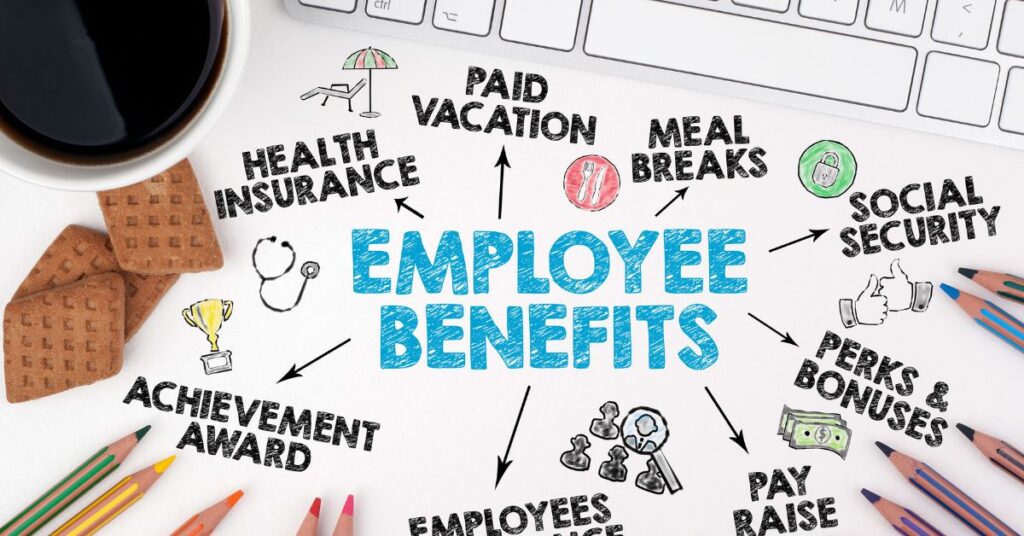
Under an EOR, your US employees have access to the benefits the EOR offers through its master plans. You can make some choices within that framework, but you cannot design benefits the way you would if you were the employer.
This matters for talent. US employees pay close attention to health insurance, dental and vision coverage, and retirement plans. If you are losing candidates to competitors with better packages, or if your benefits feel generic rather than reflective of your company, the EOR model is part of the reason.
Under PEO+, you have significantly more control over benefits design. Foothold America works with Vensure Employer Services, the largest privately held PEO in the US, which means your employees access group purchasing power and plan options that compete with large employers, and the design choices are yours. Before committing to any PEO’s benefits structure, it is worth reading The Truth About PEO Master Health Plans so you know exactly what questions to ask.
4. You want your employment agreements to reflect your company, not your EOR’s
Under an EOR arrangement, the formal employment relationship is between your employee and the EOR. Your company’s name is not on the employment agreement in the same way. The policies, notice periods, and terms sit within the EOR’s framework.
As your US team grows and your company culture develops, this starts to feel wrong. You want your US employees to work for you, clearly and legally, under agreements that reflect your own policies and values.
A PEO co-employment arrangement puts you as the common law employer. Your employees work for your company. The PEO manages the HR infrastructure behind that employment relationship, but the employment is yours.
5. You are taking on termination and performance risk yourself anyway
One of the genuine protections an EOR provides is that if an employment decision goes wrong, the EOR carries significant liability. In the early stages, when you are unfamiliar with US employment law, that protection has real value.
By the time you have been operating in the US for a year or two, your leadership team has learned how US employment works. You are making the calls on performance, management, and if necessary, termination. The EOR processes those decisions but the practical reality is that you are already carrying the reputational and operational risk yourself.
Under PEO+, the liability framework shifts accordingly. The PEO and employer share responsibility, with Foothold America’s HR team providing the compliance guidance to make sure your decisions are documented and defensible. You are not exposed, but you are not paying for protections you have effectively outgrown.
6. You are ready to build a US employment brand, not just fill US roles
Companies that are serious about the US market eventually reach a point where they want their US team to feel like a genuine part of the company, not a workforce managed at arm’s length through a third-party employer.
That means US employees who receive offer letters from your company, work under your company’s policies, and are onboarded into your culture rather than the EOR’s. It means benefits and terms that reflect the kind of employer you want to be in the US market.
It means your Foothold America HR manager helping you carry your company culture into your US operation, rather than managing your people within someone else’s framework. Scale Smarter, Not Harder explores what that looks like in practice for international companies at this stage.
PEO+ is built for companies that have decided the US is a real part of their business, not just an experiment.
What Actually Changes When You Switch

The switch from EOR to PEO+ is a structural change to the employment relationship, but it should not be disruptive to your employees’ day-to-day experience.
Your employees move onto your company’s payroll rather than the EOR’s, and employment agreements are reissued under your entity. Benefits transition to PEO+ plans with a re-enrolment process, and compliance responsibility shifts to a shared model between you and Foothold America. Your Foothold America HR manager becomes your ongoing contact for US HR support from that point forward.
A common pattern we see at Foothold America is a UK technology company that hired its first two US sales hires through EOR, formed a Delaware C-Corporation eighteen months later, and then continued on EOR for another year out of inertia. By the time they came to us with seven US employees, they were paying EOR margins on a full team, their US staff were receiving offer letters from a third-party employer rather than the company itself, and their benefits package was locked within the EOR’s master plan with no room to adjust. The switch to PEO+ took eleven weeks end-to-end. By the time it was complete, their US employees had contracts under the company’s own name, a benefits package the founders had actually chosen, and a monthly HR cost that was around 30 percent lower than what they had been paying. The delay cost them roughly $40,000 in unnecessary EOR margin over that extra year.
What stays the same: your employees continue to be managed and directed by you, their day-to-day work is unchanged, payroll continues without interruption, and their seniority and employment history with your company is preserved.
The transition typically takes two to three months end-to-end. That includes employee communication, benefits transition, payroll setup, and agreement updates. Foothold America manages that process alongside you. For the full step-by-step walkthrough of how the transition works, read the EOR to PEO transition guide.
What PEO+ Really Takes Off Your Plate
Understanding what changes structurally is one thing. Understanding what PEO+ takes over from your internal team on a day-to-day basis is what makes the decision feel real.
A PEO provider plays a pivotal role in consolidating the HR functions that currently sit across too many people and too many systems. For most international companies at this stage, human resource management is being handled by a finance lead, an operations manager, or a home country HR department that was never set up to manage US employment. PEO services change that by giving you a dedicated structure built for the job.
Payroll processing is the most visible shift. Every pay cycle, every state tax filing, every year-end document moves from your internal team’s to-do list to Foothold America’s. Tax compliance across federal, state, and local levels is managed as part of the core service, including registration in new states as your number of employees grows and your footprint expands.
Benefits administration and benefits enrollment move under the PEO’s management. New hires are guided through the enrollment process as part of a structured employee onboarding experience, rather than being handed a folder and left to figure it out. That onboarding process extends to HR policies, welcome documentation, and the compliance steps that most companies handle inconsistently when they are managing it themselves.
Risk management sits with Foothold America’s compliance support team, covering workers’ compensation, employment liability, and the kind of compliance issues that catch international employers off-guard when they arise unexpectedly. Your internal team retains full control over business operations, performance management, and the day-to-day direction of your people. The essential services that keep the employment infrastructure running sit with us.
The result is a cleaner division of responsibility. You focus on employee engagement, employee satisfaction, and building the kind of US team your business actually needs. We handle the HR expertise, the compliance framework, and the administrative HR processes that should never have been sitting with your leadership in the first place.
For international companies, there is an additional layer that standard PEOs do not address. Your home country HR department and your US workforce operate in fundamentally different systems. Foothold America’s PEO+ Cross-Border Support bridges that gap, so your home HR team has a counterpart who understands both sides and can translate between them. That support covers everything from new employee onboarding to ongoing HR needs as your US headcount grows.
EOR vs. PEO+: The Key Differences at a Glance
Factor | EOR | PEO+ |
US entity required | No | Yes |
Legal employer | EOR | Shared: you are common law employer, PEO handles tax and insurance |
Benefits control | Limited, within EOR’s master plans | Greater, you control contributions and design |
Employment agreements | Under EOR’s framework | Under your company, co-managed with PEO |
Cost structure | Higher margin per employee reflecting employer risk premium | Lower per-employee cost once entity is established |
Termination liability | EOR carries significant responsibility | Shared, with Foothold America providing compliance guidance |
Cross-border HR support | Depends on EOR | Core feature of Foothold America’s PEO+ |
Right for | Companies without a US entity, early-stage US hiring | Companies with a US entity and a growing US team |
Choosing the Right PEO Partner Once You Have Decided to Switch
Not all PEOs are built for international companies. A standard US PEO is designed for a US business with a US HR team. It does not account for the cross-border dynamic: a UK or European headquarters managing a US workforce across different timezones, employment law systems, and HR expectations.
When you are evaluating your options, 10 Things to Consider When Choosing a PEO Partner is a practical starting point, and Top Tips: Finding the Best PEO Partner covers the questions that separate good providers from great ones. If you have already been through a PEO that did not work out, A Strategic Approach to Changing PEO Partners covers what to look for the second time around.
Foothold America’s PEO+ model is built specifically for international companies. Our HR and client service managers are based in the UK and Europe to support your international headquarters, while our US team supports your workforce directly. That cross-border structure is not an add-on. It is the core of how we work.
What You Need in Place Before You Can Switch
To move to PEO+, you need three things: a registered US legal entity, a US Employer Identification Number, and a US business bank account. If your entity is set up but you are still working through the EIN or bank account, our team can help. If you do not yet have a US entity, our US Entity Setup service handles registration and gets you PEO-ready.
Once those foundations are in place, PEO+ onboarding takes two to four weeks for initial setup, with the full transition typically completed within two to three months.
Not Sure Which Model Is Right for You Now?
If you have a US entity but a small team, or you are weighing the cost difference but not sure the timing is right, our Service Calculator gives you a starting point. Or talk to one of our US expansion advisors directly. We will tell you honestly whether EOR or PEO+ makes more sense for where you are right now.