


At Will Employment Exceptions | Know Your Worker Rights
At-will employment sounds simple: hire or fire at any time, for any reason. The reality is more nuanced. While 49 US states operate under at-will principles, almost every one recognises legal exceptions that protect workers from unfair dismissal. Here is how those exceptions actually work in 2026, state by state.

How to Enter the US Market | Step-by-Step Strategy for International Companies
The decision to enter the US market is often the most consequential growth move an international company will ever make. The opportunity is enormous, the complexity equally so. Three main paths exist: full entity setup, Employer of Record, or entity plus virtual office. Here is how to choose between them.

GmbH vs US C-Corporation vs LLC
1.4 million GmbHs in Germany. 1.56 million LLCs in Delaware alone. For German owners planning a US expansion, the entity decision is the first commitment they make, and the one most often made on autopilot. This guide compares the three structures and the framework for choosing between them.

German Tax Discipline vs the US 50-State Tax Maze | What German CFOs Must Plan For
Germany offers one coordinated corporate tax framework. The United States offers fifty overlapping tax jurisdictions, layered sales tax rules, and fragmented payroll compliance. This guide explains what German CFOs need to understand before US expansion, including state tax exposure, Wayfair nexus, Delaware incorporation, payroll obligations, and the hidden cost of compliance complexity.

Expand Your Tech Ops to the US
The US IT services market is projected to reach $737 billion by 2031. For UK and European tech businesses with real traction, the opportunity is significant. But readiness matters more than ambition. These 10 signs will tell you whether your Tech Ops foundations are really in place.

US Feedback and Performance Culture: Why Direct Is Not the Same as Harsh
American feedback culture is neither as blunt as it looks nor as soft as it feels. It is strategically framed, legally significant, and far more frequent than most international managers expect. Understanding how it works is essential to managing performance and retaining US talent effectively.

US Decision-Making | Why Americans Decide Fast and Adjust Later
American decision-making runs on speed, personal accountability, and the confidence to act on 80% of the available information. For international managers used to thorough consensus-building, this can feel disorienting. Understanding the logic behind it is essential to leading effectively in any US business environment.

Legal Termination Guide: How to Fire a US Employee Without a Lawsuit
Terminating a US employee is one of the most legally consequential decisions an international employer can make. The at-will doctrine offers flexibility, but federal and state requirements create serious liability if you get it wrong. This guide covers every step, from documentation to final pay compliance.

German Employment Law vs. US At-Will | What Mittelstand Companies Must Unlearn
Transitioning from Germany’s rigid dismissal protections to the US “at-will” system is a major shift for Mittelstand executives. Success requires unlearning the reliance on long notice periods and complex contracts. By embracing US-compliant offer letters and results-based documentation, German firms can maintain their values while gaining American operational flexibility.
German Tax Discipline vs the US 50-State Tax Maze | What German CFOs Must Plan For
Germany offers one coordinated corporate tax framework. The United States offers fifty overlapping tax jurisdictions, layered sales tax rules, and fragmented payroll compliance. This guide explains what German CFOs need to understand before US expansion, including state tax exposure, Wayfair nexus, Delaware incorporation, payroll obligations, and the hidden cost of compliance complexity.
German Employment Law vs. US At-Will | What Mittelstand Companies Must Unlearn
Transitioning from Germany’s rigid dismissal protections to the US “at-will” system is a major shift for Mittelstand executives. Success requires unlearning the reliance on long notice periods and complex contracts. By embracing US-compliant offer letters and results-based documentation, German firms can maintain their values while gaining American operational flexibility.

Denmark vs. USA: Key Differences in Doing Business (What Surprises Danish Companies Most)
Danish companies entering the US market bring real strengths: international experience, high English fluency, and commercial credibility. But the operational assumptions built into Danish business practice do not transfer to America. Employment law, tax, benefits, and communication culture all work differently. Here is what to expect.

When to Switch from EOR to PEO | Signs Your US Operation Has Outgrown Its Hiring Model
Your EOR got you started in the US. But if you have a US entity, a growing team, and an EOR bill that no longer makes sense, the model has run its course. Here are the six signs your US operation has outgrown its hiring model and what to do next.

Speed to Market: How EOR Services Accelerate US Expansion Timelines
The race to establish US market presence has never been more competitive. International companies face urgent reality: market opportunities emerge rapidly, customer expectations evolve constantly, and competitive landscapes shift overnight. Traditional entity setup approaches have become critical disadvantages when speed determines long-term success in America’s dynamic business environment.

Making the Switch: A Strategic Approach to Changing EOR Partners
Managing your US workforce shouldn’t keep you awake at night. If you’re struggling with delayed benefits, payroll errors, and poor compliance guidance from your current EOR provider, you’re not alone. Discover why international companies are switching to specialized US providers and how strategic transitions transform operations into competitive advantages.
When to Switch from EOR to PEO | Signs Your US Operation Has Outgrown Its Hiring Model
Your EOR got you started in the US. But if you have a US entity, a growing team, and an EOR bill that no longer makes sense, the model has run its course. Here are the six signs your US operation has outgrown its hiring model and what to do next.

A Strategic Approach to Changing PEO Partners
Changing PEOs isn’t about vendor switching; it’s a strategic decision that can transform your US operations. If recurring errors, unresponsive support, or compliance gaps are holding back your expansion, it’s time to switch PEO partners. This guide walks international companies through recognizing problems and executing seamless transitions to specialized support.

10 Things to Consider When Choosing a PEO Partner
Choosing a PEO partner isn’t a simple vendor decision – it’s a strategic choice that impacts every employee you hire and every compliance requirement you manage. For international companies expanding to the US, selecting the right PEO means finding a partner who truly understands cross-border complexity and American employment norms.
GmbH vs US C-Corporation vs LLC
1.4 million GmbHs in Germany. 1.56 million LLCs in Delaware alone. For German owners planning a US expansion, the entity decision is the first commitment they make, and the one most often made on autopilot. This guide compares the three structures and the framework for choosing between them.

IRS Audit Triggers: Red Flags for Foreign-Owned US Businesses
The IRS does not distinguish between deliberate non-compliance and honest ignorance. For foreign-owned US businesses, the penalties are the same either way and the exposure is larger than most founders expect. This guide covers the seven audit triggers that catch international companies off-guard and how to avoid them.

Delaware vs Other States for International Companies: Tax Calculator & Decision Matrix
International companies expanding to the US face a critical decision: where to incorporate. While Delaware hosts 68% of Fortune 500 companies, recent corporate exodus including Tesla and Meta signals changing dynamics. This comprehensive guide analyzes incorporation costs, tax implications, and strategic considerations across Delaware, Wyoming, Nevada, Texas, and California for international executives.

Virtual Office vs P.O. Box | Legal Differences for US Registration
Most states reject P.O. boxes for business registration. They require physical street addresses for corporations, LLCs, and registered agents. Virtual offices provide legitimate addresses that satisfy Secretary of State requirements, open business bank accounts, and meet IRS standards. For international companies expanding to the US, this distinction determines registration approval or rejection.

Multi-Location Virtual Office Strategy
For international businesses expanding into the United States, successful market penetration requires thinking beyond a single-location strategy. The US market demands a multi-regional approach that reflects America’s diverse business ecosystem, with strategic presence across key regions like New York, San Francisco, Chicago, and emerging growth markets.

How to Choose the Right Virtual Office Location for Your US Business
When expanding into the United States, your virtual office location becomes far more than a mailing address—it’s your market positioning strategy and often the deciding factor in whether clients, investors, and banks take your business seriously. A London fintech might thrive with a Manhattan address that opens doors to financial institutions, while a Berlin software company could find greater success in Silicon Valley’s innovation ecosystem. This guide reveals how to navigate America’s distinct regional advantages and choose a location that accelerates your US market success.
German Tax Discipline vs the US 50-State Tax Maze | What German CFOs Must Plan For
Germany offers one coordinated corporate tax framework. The United States offers fifty overlapping tax jurisdictions, layered sales tax rules, and fragmented payroll compliance. This guide explains what German CFOs need to understand before US expansion, including state tax exposure, Wayfair nexus, Delaware incorporation, payroll obligations, and the hidden cost of compliance complexity.
Legal Termination Guide: How to Fire a US Employee Without a Lawsuit
Terminating a US employee is one of the most legally consequential decisions an international employer can make. The at-will doctrine offers flexibility, but federal and state requirements create serious liability if you get it wrong. This guide covers every step, from documentation to final pay compliance.
IRS Audit Triggers: Red Flags for Foreign-Owned US Businesses
The IRS does not distinguish between deliberate non-compliance and honest ignorance. For foreign-owned US businesses, the penalties are the same either way and the exposure is larger than most founders expect. This guide covers the seven audit triggers that catch international companies off-guard and how to avoid them.

Employee Handbook Essentials | Why Templates Fail Multi-State US HR
Template employee handbooks cost $49 but create thousands in liability. California requires daily overtime and meal break policies. New York mandates specific sexual harassment elements. Texas needs strong at-will language. One generic template satisfies no jurisdiction completely, creating under-compliance in strict states and over-promising in at-will states.

State Disability Insurance in the USA
State Disability Insurance provides temporary wage replacement for workers unable to work due to non-work-related illness, injury, or pregnancy. Only five US states mandate these programs: California, Hawaii, New Jersey, New York, and Rhode Island. International employers must understand state-specific contribution rates, benefit calculations, and compliance requirements.

How To Open a US Bank Account | Challenges for International Founders
Opening a US business bank account as an international founder requires proper documentation, a registered US entity, and the right banking partner. Traditional banks reject most international applications, but online solutions like Mercury and Revolut offer FDIC-insured accounts designed specifically for remote businesses without US physical presence.
Legal Termination Guide: How to Fire a US Employee Without a Lawsuit
Terminating a US employee is one of the most legally consequential decisions an international employer can make. The at-will doctrine offers flexibility, but federal and state requirements create serious liability if you get it wrong. This guide covers every step, from documentation to final pay compliance.

How to Build Team Culture Across US Time Zones
Building a US team across multiple time zones is challenging. Learn how international companies can keep employees connected, productive, and engaged with intentional scheduling, communication, and recognition.

Virtual Activities That Help New US Hires Feel Connected from Day One
Virtual onboarding in US distributed teams often leaves new hires isolated and disengaged. Without intentional social, professional, and cultural connection, employees struggle to integrate, slowing productivity and increasing turnover. This guide shares 10 proven virtual activities that build authentic relationships from day one, helping companies retain top talent across time zones.

Silicon Valley or Bust? The International AI Founder’s Guide to America’s $851 Billion Gold Rush
The US artificial intelligence market is exploding toward $851 billion by 2034, creating unprecedented opportunities for international firms. With AI startups capturing 64% of US venture capital and global funding surpassing $100 billion, America’s tech hubs are transforming into battlegrounds for the world’s most innovative AI companies.RetryClaude can make mistakes. Please double-check responses.

Navigating Retail Hiring in America’s Top Retail Hubs: A Comprehensive Guide
In today’s competitive retail landscape, hiring top talent requires understanding the unique compliance challenges across America’s diverse markets. From NYC’s predictive scheduling laws to Chicago’s seasonal staffing patterns, retailers must master city-specific regulations while maintaining operational efficiency. Here’s your guide to compliant retail hiring across the US.

Navigating e-Learning Industry Growth: US Expansion Hubs and Case Studies
The US e-learning market is projected to reach $187 billion by 2028, creating unprecedented opportunities for international firms. With cross-border partnerships at record levels and international companies now capturing 31% of US market revenue, strategic expansion into key regional hubs offers significant growth potential.
US Feedback and Performance Culture: Why Direct Is Not the Same as Harsh
American feedback culture is neither as blunt as it looks nor as soft as it feels. It is strategically framed, legally significant, and far more frequent than most international managers expect. Understanding how it works is essential to managing performance and retaining US talent effectively.
US Decision-Making | Why Americans Decide Fast and Adjust Later
American decision-making runs on speed, personal accountability, and the confidence to act on 80% of the available information. For international managers used to thorough consensus-building, this can feel disorienting. Understanding the logic behind it is essential to leading effectively in any US business environment.

US Work-Life Integration: Why the Line Is Blurry by Design
In the US, “balance” is out and “integration” is in. For international managers, this means moving away from rigid hours toward a results-oriented culture. Understanding that American employees value autonomy over their schedules is key to building trust and retaining top talent in a competitive, fluid work environment.
Expand Your Tech Ops to the US
The US IT services market is projected to reach $737 billion by 2031. For UK and European tech businesses with real traction, the opportunity is significant. But readiness matters more than ambition. These 10 signs will tell you whether your Tech Ops foundations are really in place.
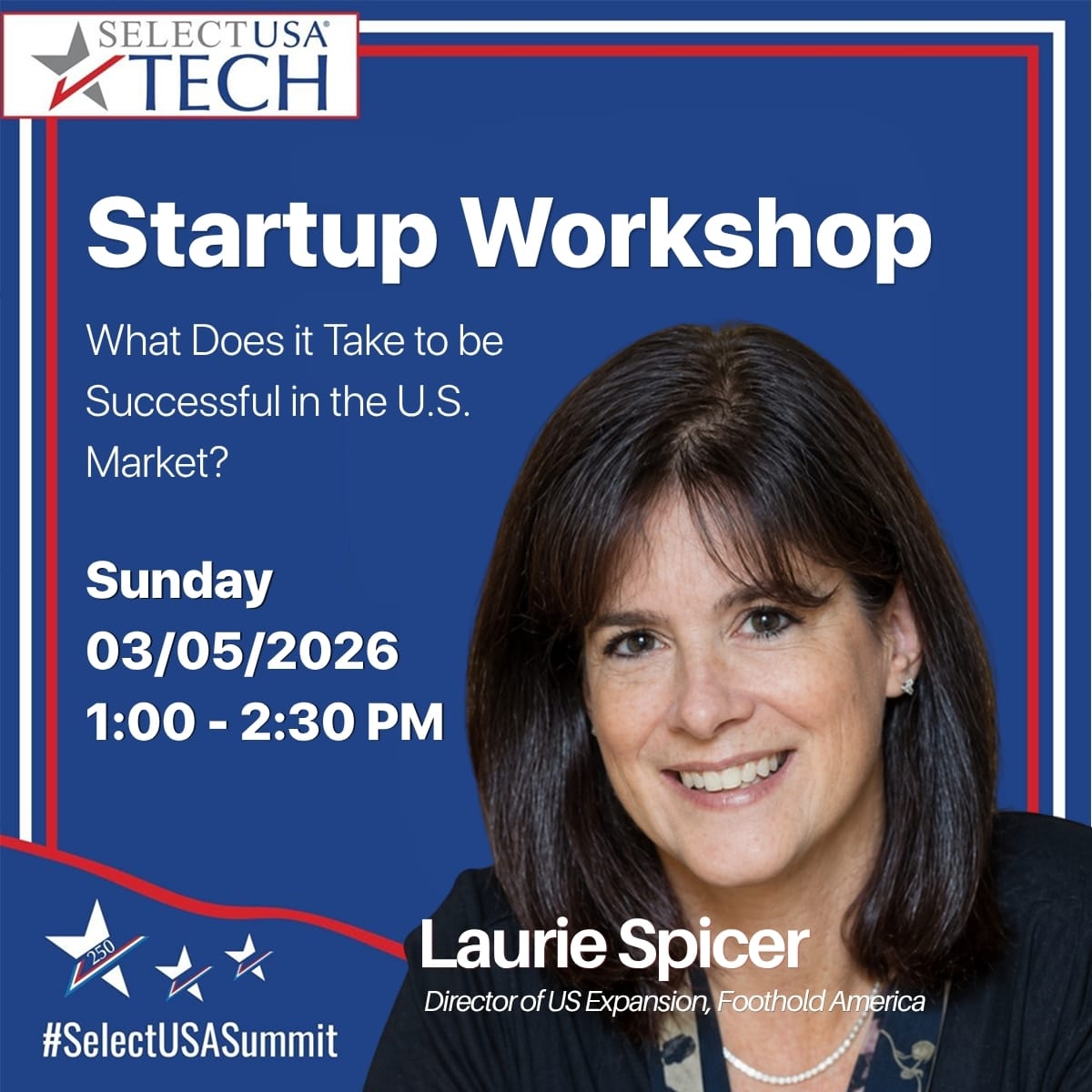
Foothold America’s Laurie Spicer Joins SelectUSA 2026 Tech Track
Foothold America’s Director of US Expansion, Laurie Spicer, will facilitate the official startup workshop at the SelectUSA Investment Summit 2026, May 3 to 6 at National Harbor, Maryland. Join us for practical, experience-led insights on what it actually takes to succeed in the US market.

The World Cup Is Coming to America. European Brands, the Window Is Still Open.
On June 11, 2026, the FIFA World Cup returns to American soil for the first time in 32 years. For European brands eyeing US expansion, this is the moment. With 87 days on the clock, a global audience watching, and billions flowing into 11 host cities, the window is open, but not indefinitely.
