



For international companies expanding to the United States, an Employer of Record (EOR) service offers a simpler solution for hiring employees without establishing a legal entity. However, the contract governing this relationship can significantly impact your experience, costs, and overall success in the US market.
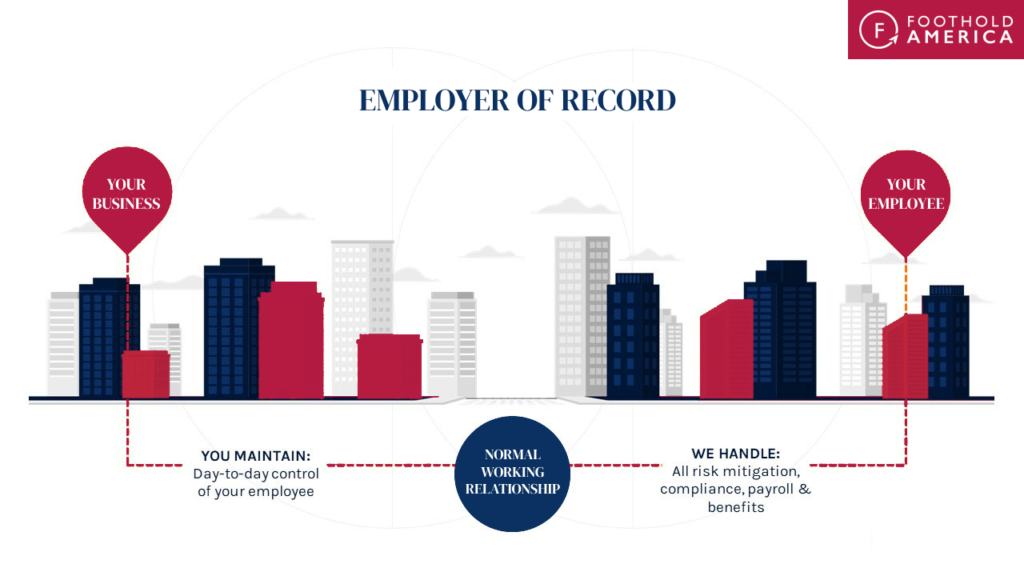
“The EOR contract sets the rules of engagement for one of your most critical business relationships during US expansion,” explains Joanne Farquharson, President and CEO of Foothold America. “It’s important to thoroughly review the contract as it specifies key details about the worker relationship that will impact your operations months later when you’re established with the provider.”
As EOR adoption grows among international businesses, understanding contract terms has become increasingly important. This has led to more complex and varied contract structures across providers, so careful review is essential before signing.
While many EOR providers attempt to cover multiple countries with varying levels of expertise, Foothold America stands apart with our exclusive focus on the United States. This specialised approach means we bring deep experience of US employment compliance across all 50 states. This US-focused specialization for international companies translates to contracts that provide better protection and more favorable terms tailored to the American market.
This full guide explores the critical contract terms every business should evaluate, identifies potential red flags, and provides practical guidance to secure favorable terms that protect your interests while supporting your US expansion goals.
Essential EOR Contract Terms to Evaluate
Before signing an EOR agreement, carefully review these key contract components to ensure they align with your business needs and expansion plans.
1. Scope of Services & Responsibilities
What to look for:
Clear understanding of how employment responsibilities are managed, including
- Who manages the employee onboarding and offboarding processes
- How payroll processing and tax filings are handled
- How benefits administration and enrollment are coordinated
- Which party oversees HR compliance responsibilities
- The approach to employee relations management
Red flags:
- Lack of clarity about service expectations and deliverables
- Absence of specific timelines for key processes
- No clear communication channels for resolving questions about responsibilities
- Insufficient information about how compliance matters are handled
- Confusion regarding the roles of each party in managing employment functions
Many EOR contracts contain ambiguous language about who handles which employment responsibilities. To avoid potential misunderstandings about service scope within your EOR relationship, ensure your contract clearly identifies who is responsible for each aspect of employment management.
2. Fee Structure & Pricing Transparency
What to look for:
- Clearly defined base fees and calculation methods
- Transparent disclosure of all potential additional charges
- Historical pricing trends and stability
- Volume discounts for larger employee counts
- Clear examples of total cost scenarios
Red flags:
- Complex pricing models with multiple variables
- Undefined “administrative fees” or “processing fees”
- Unlimited right to increase fees with minimal notice
- Percentage-based models without caps
- No employee budget projections showing estimated total employment costs
The most common EOR pricing models include:
Pricing Model | How It Works | Pros | Cons |
Flat Fee Per Employee | Fixed monthly amount per employee | Predictable, scales well | Can become expensive with high employee count |
Percentage of Payroll | Fee calculated as percentage of total payroll | Aligns with actual salary costs | Can become expensive with higher salaries |
Tiered Pricing | Rates decrease with more employees | Cost-effective for growth | Complex to calculate initially |
Base Plus Variable | Core fee plus add-ons | Customizable | Can lead to unexpected costs |
“In our experience, the most transparent EOR providers offer clean, simple pricing with minimal variables,” notes Angelique Soulet-Bangurah, Head of EOR Services at Foothold America. “We’ve seen companies face unexpected costs of 15-30% above initial estimates due to contract fine print and undisclosed fees.”
3. Termination Provisions & Exit Strategy
What to look for:
- Reasonable notice periods (ideally 30-60 days)
- A transparent process for transitioning employees
- Fair and clearly defined termination fees
- Data transfer protocols upon termination
- Post-termination support options
Red flags:
- Long notice periods (90+ days)
- Excessive early termination penalties
- Automatic renewal clauses with narrow cancellation windows
- Ambiguous language about data ownership
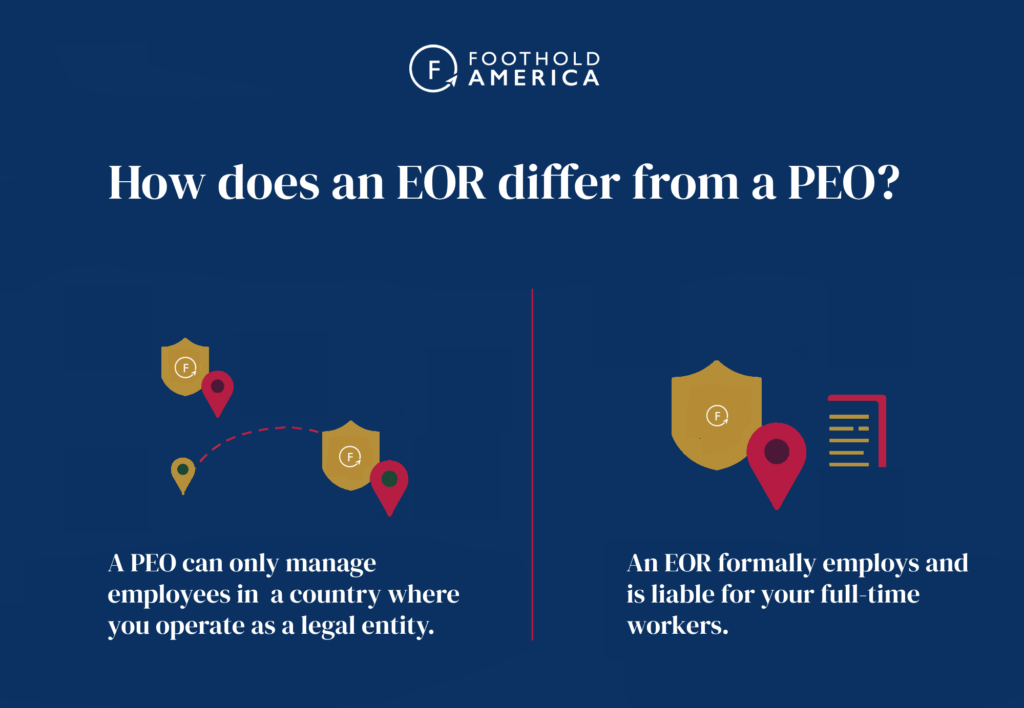
Exiting an EOR relationship efficiently becomes crucial as your US operations evolve. Working with providers who offer both EOR and other hiring models creates a more simpler transition as your company grows. Many companies move from an EOR to another employment model, such as a PEO, as their US presence matures. Without favorable termination provisions, this transition can become unnecessarily costly and disruptive.
4. Service Level Agreements (SLAs)
What to look for:
- Defined response times for inquiries and issues (expect it to be within 24 hours)
- Clear escalation procedures
- Performance metrics with consequences for non-compliance
- Regular service review mechanisms
- Dedicated account management specifications
- Communication protocols for different situations
- Specified HR manager assignment for personalized support
Red flags:
- Absence of measurable service standards
- One-way accountability (yours, not theirs)
- Vague promises without specific commitments
- Limited availability in your time zone
- Anonymous support teams rather than dedicated contacts
Effective SLAs protect your business from poor service that could impact your employees and operations. A well-structured SLA creates accountability, establishes clear expectations for performance, and provides remedies if services fall below agreed standards. Beyond just metrics, the most valuable SLAs establish a framework for ongoing communication and relationship management, ensuring your EOR partner remains responsive to your evolving needs throughout your US expansion journey.
5. Compliance Guarantees & Liability Allocation
What to look for:
- Explicit compliance guarantees with major employment laws
- Clear liability allocation for tax-related matters
- Indemnification provisions that protect your company
- Verification of the EOR’s appropriate insurance coverage
- Compliance expertise across all relevant states
Red flags:
- Minimal insurance coverage
- Caps on liability that are inappropriately low
- Mandatory arbitration clauses with unfavorable terms
- Excessive restrictions on employee transitions
- Unclear remedies for service failures
The primary value proposition of an EOR is compliance expertise and risk mitigation. Your contract should reflect this by placing appropriate responsibility on the EOR for compliance matters within their control. Employment compliance violations can bring back pay, penalties and legal costs, and your contract should protect you from bearing them.
Beyond the Basics: Advanced Contract Considerations
While the fundamental terms above form the core of any EOR agreement, sophisticated international companies should also evaluate these additional contract elements for full protection.
6. Benefits and Insurance Flexibility
What to look for:
- Clear process for accessing standard benefits information
- Transparent costs for benefits administration
- Understanding of how benefits decisions are made
- Awareness of regulatory limitations on benefits customization
- Regular communication about benefits updates
Red flags:
- Lack of clarity about available benefits options
- No proactive communication about benefits changes
- Hidden charges for benefits administration
- Unrealistic promises about benefits customization that may conflict with legal requirements
Recent trends show significant regional variations in benefits expectations across the US. Consider whether your EOR contract provides the flexibility to offer competitive benefits in your specific industry and location. As healthcare costs continue to evolve and employee expectations shift, the ability to adapt your benefits strategy becomes increasingly valuable. The right EOR contract should allow for adjustments to your benefits approach as market conditions change and your US presence matures.
7. Geographic Coverage & Expansion Support
What to look for:
- Specific states or regions covered by the agreement
- Process for adding employees in new states
- Transparent costs for multi-state expansion
- Support for different employment models (remote, hybrid, office-based)
- Specialized knowledge of state-specific regulations
- US-focused expertise rather than diluted global coverage
Red flags:
- Limited geographic coverage without transparent expansion options
- Significant surcharges for certain states
- One-size-fits-all policies, regardless of location
- Lack of state-specific compliance expertise
- Hidden costs for supporting different work models
- Global providers with superficial US market knowledge
“Many international companies don’t realize the significant variation in employment laws across US states,” notes Angelique Soulet-Bangurah. “An EOR contract that treats California the same as Texas may indicate a lack of sophisticated compliance infrastructure. Unlike global providers who spread their attention across dozens of countries, Foothold America’s exclusive US focus ensures we have deep expertise in every state’s unique requirements, which is reflected in our more precise and protective contract terms.”
Red Flag Contract Clauses to Avoid
Beyond evaluating essential terms, be alert for these problematic contract provisions that could create significant issues:
1. Absence of Dedicated HR Support
The risk: Many EOR contracts, particularly from global providers, offer only portal-based or rotating support teams rather than dedicated HR professionals who understand your unique business needs and challenges.
What to look for instead: Contract terms guarantee a dedicated HR manager who is your consistent point of contact, understands your business and provides personalized support throughout your US expansion journey. At Foothold America, every client is assigned a dedicated HR manager who works alongside our US team to provide smooth support.
2. Lack of State-Specific Expertise
The risk: Some EOR contracts contain generic compliance language that fails to address the specific requirements of individual US states where your employees will be located, creating potential regulatory exposure.
What to look for instead: Specific provisions demonstrating the provider’s expertise in each state’s unique employment laws, tax regulations, and compliance requirements. As a US-focused specialist, Foothold America’s contracts include state-specific protections rather than one-size-fits-all global terms.
3. Unreasonable Non-Solicitation Clauses
The risk: Overly broad non-solicitation provisions might prevent you from directly hiring your EOR-employed team members even after the contract ends, forcing ongoing dependency on the EOR.
What to look for instead: Time-limited non-solicitation clauses (maximum 6-12 months) with exceptions for mutual agreement or employee-initiated applications.
4. Hidden Fee Escalators
The risk: Some contracts include automatic fee increases based on inflation, benefit costs, or regulatory changes without caps or transparency.
What to look for instead: Clear limitations on fee increases (e.g., maximum 3% annually) with advance notice requirements and options to terminate if increases exceed certain thresholds.
5. Employee Transfer Restrictions
The risk: Some contracts impose significant barriers to transitioning employees away from the EOR, such as excessive fees or procedural hurdles.
What to look for instead: Clear, reasonable processes for employee transitions with transparent, fair costs that reflect actual administrative expenses rather than punitive charges.
The Advantage of US-Focused EOR Expertise
When evaluating EOR providers and their contracts, the distinction between global providers and US specialists becomes increasingly essential. Many international companies initially gravitate toward global EOR providers, assuming broader coverage equals better service. However, this approach often has significant disadvantages when expanding to the United States.
“The US employment landscape is uniquely complex compared to most countries,” explains Joanne Farquharson. “With 50 different states, each with their employment laws, tax regulations, and compliance requirements, proper US expansion requires deep, specialized expertise rather than surface-level global coverage.”
Compare Foothold America’s US-focused approach to global providers →
Foothold America’s exclusive focus on the US market provides several distinct advantages that are reflected in our contract terms:
- State-Specific Compliance Guarantees: Unlike global providers who often use general compliance language, our contracts include specific protections relevant to each state where you operate.
- More Precise Risk Allocation: Our contracts delineate responsibilities based on US employment law rather than generic international standards.
- Absence of Cross-Border Complexity: Contracts from global providers often contain unnecessary provisions addressing international transfers and multiple legal jurisdictions, creating confusion and potential conflicts.
- Transparent US-Specific Pricing: Our fee structures reflect the actual costs of US employment without hidden margins for international service coordination.
- Specialized US Support Commitments: Our SLAs are built around US business hours and regulatory timelines rather than compromising across multiple time zones.
Building a Successful EOR Relationship Beyond the Contract
While a well-structured contract provides essential protection, the success of your EOR relationship ultimately depends on ongoing management and communication. Implement these best practices regardless of your contract terms:
1. Establish Regular Review Meetings
Schedule quarterly service reviews to evaluate performance against SLAs, discuss any issues, and align on upcoming needs or changes.
2. Document Everything
Maintain detailed records of all communications, particularly regarding service issues, special requests, or verbal agreements that supplement the written contract.
3. Develop Internal Expertise
Designate team members to develop expertise in US employment practices and EOR management, reducing your dependency on the provider for basic information.
4. Plan for Evolution
Assess regularly whether your EOR relationship continues to meet your evolving needs as your US presence grows, and prepare well in advance for potential transitions.
5. Build Relationships Beyond Account Managers
Develop connections with multiple stakeholders at your EOR provider, including operations personnel and executives, to ensure continuity if your account manager changes.
Conclusion & Next Steps
The right EOR contract forms the foundation for a successful US expansion, providing protection against potential risks and a framework for productive collaboration. By carefully evaluating the terms discussed in this guide, you can avoid common pitfalls and secure an agreement that supports your business objectives.
“An EOR contract isn’t just a legal document – it’s a blueprint for one of your most important business relationships during US market entry,” emphasizes Joanne Farquharson. “The time invested in securing favorable terms with a true US specialist pays dividends throughout your expansion journey.”
Unlike global providers who spread their attention across dozens of countries with varying levels of expertise, Foothold America’s exclusive focus on the United States ensures we provide unmatched knowledge of US employment law, tax regulations, and compliance requirements. This specialized approach is reflected in our contracts, which offer superior protection explicitly tailored to the unique complexities of the American market.
Ready to navigate the complexities of EOR contracts for your US expansion? Foothold America provides specialized expertise in US employment solutions for international companies, with transparent agreements designed to protect your interests while supporting your growth objectives. Contact us today to discuss how our experienced team can help you secure the optimal EOR arrangement for your unique needs.